What is an artificial lift pump and how does it work?
The artificial lift pump plays a crucial role in the oil and gas industry. It helps extract oil from wells lacking sufficient pressure. According to a report from the International Association of Drilling Contractors, over 90% of oil wells use some form of artificial lift technology. This highlights its importance in maximizing production efficiency.
Industry experts emphasize this technology's impact. Dr. Emily Jennings, a specialist in fluid dynamics, once stated, "Artificial lift pumps are vital for maintaining well productivity." Her insight underlines the necessity of understanding how these pumps function.
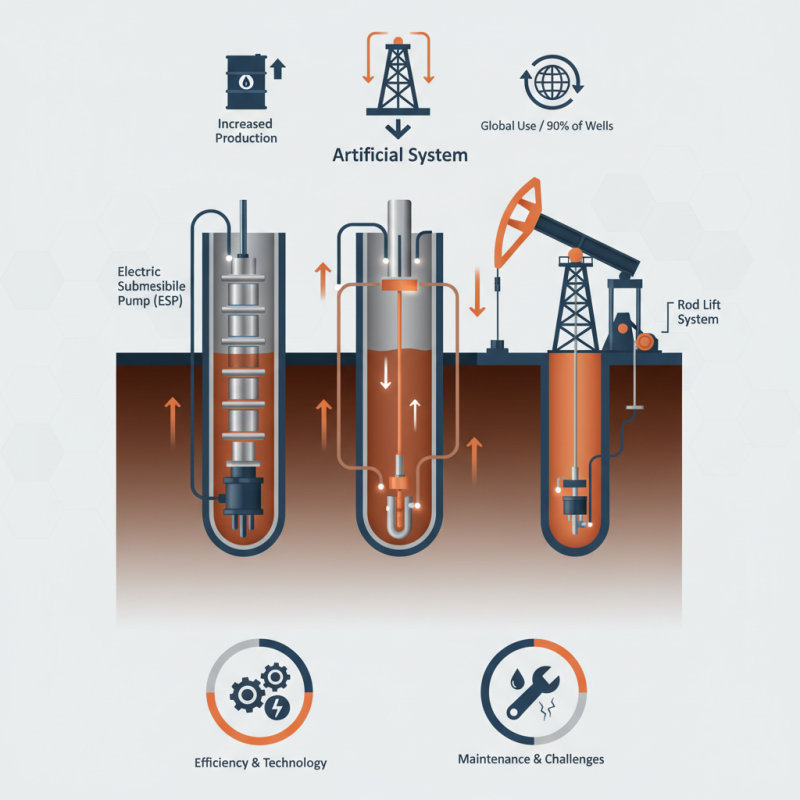
Artificial lift pumps can vary in type, including electric submersible pumps and rod lift systems. Each type has its advantages and challenges. It's worth noting that while artificial lift pumps improve oil extraction, they require regular maintenance. Ignoring this can lead to costly downtime. Continuous innovation in this field is crucial, yet challenges remain in optimizing these systems for diverse environments.
Definition and Purpose of Artificial Lift Pumps in Oil Extraction
Artificial lift pumps play a crucial role in oil extraction. These devices help lift fluids from a well when natural pressure isn’t sufficient. The need for artificial lift arises in more than 90% of oil wells, as reservoirs begin to decline. According to industry reports, around 70% of oil production is via artificial lift systems.
There are numerous types of artificial lift systems. Each has its own advantages and limitations. For example, rod lift systems are still widely used due to their low cost and ease of maintenance. Their performance can vary significantly depending on well conditions. In some cases, these systems may not be the most efficient choice. This can lead to higher operational costs and reduced profitability.
A more recent analysis indicated that electrical submersible pumps (ESPs) can enhance production rates by up to 100%. However, they require regular monitoring and maintenance. Failing to manage these pumps properly can lead to downtime and increased expenses. Therefore, the selection of an artificial lift pump must consider not only initial costs but also long-term operational efficiency. Each project requires careful evaluation to ensure optimal performance and cost-effectiveness.
What is an artificial lift pump and how does it work? - Definition and Purpose of Artificial Lift Pumps in Oil Extraction
| Type of Artificial Lift Pump |
Definition |
Purpose |
Advantages |
Typical Applications |
| Rod Pump |
A mechanical device with a rod that transports fluids from underground |
To lift oil and gas from wells with lower pressure |
Low maintenance, reliable, cost-effective |
Onshore oil fields |
| Electric Submersible Pump (ESP) |
An electric pump submerged in the wellbore |
To enhance production from high-volume wells |
High efficiency, suitable for deep wells |
Deep offshore drilling |
| Progressing Cavity Pump |
A positive displacement pump with a helical rotor |
To lift viscous fluids in challenging environments |
Handles high viscosity, suitable for various fluids |
Heavy oil production |
| Gas Lift |
Injects gas into the well to reduce fluid density |
To increase the flow of crude oil |
Low cost, effective for high-pressure wells |
Offshore and onshore applications |
Types of Artificial Lift Systems and Their Applications in the Industry
Artificial lift systems are critical in the oil and gas industry. They enhance the flow of liquids from wells that would otherwise be unable to produce efficiently. There are several types of artificial lift methods, each tailored to specific conditions and fluid properties.
One common type is the beam pumping system. This method is effective in wells with low production rates. Data shows that beam pumps can increase oil recovery by up to 80% in certain cases.
Electric submersible pumps (ESPs) are another popular choice. They excel in deep wells, capable of lifting fluids from depths of over 15,000 feet. Reports indicate that ESPs can significantly reduce energy consumption, making operations more economical.
Plunger lift systems also play a vital role. They are often used in gas wells. Their simplicity allows for minimal maintenance, yet they can boost production by 30% or more. However, the choice of the artificial lift system must consider factors like fluid type, well depth, and land conditions. Different methods come with their own challenges, and no single solution fits all scenarios. Understanding these systems is crucial for optimizing production and maximizing resource recovery.
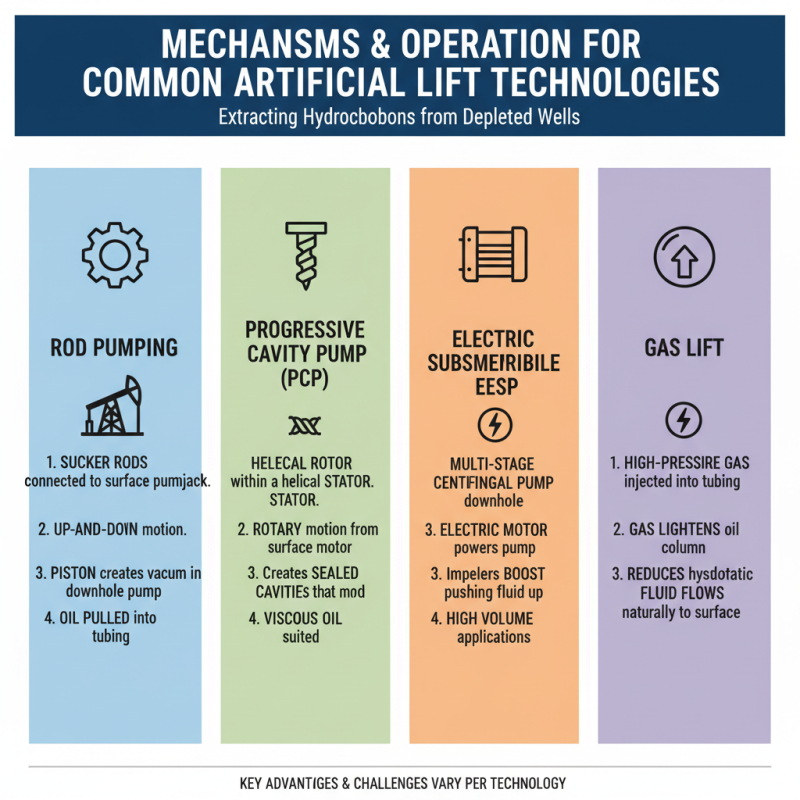
Mechanisms of Operation for Common Artificial Lift Technologies
Artificial lift pumps are crucial in the oil and gas industry. They help extract hydrocarbons from wells where natural pressure is insufficient. Several technologies exist, each with distinct mechanisms of operation, providing various advantages and challenges.
One common type is the beam pump. This system uses a surface power unit to create a mechanical movement. The movement translates through rods into the well, lifting fluid to the surface. Its simplicity is appealing, but it can wear down quickly. Maintenance is essential and often overlooked. Often, operators find that the stress it places on components leads to unexpected failures.
Another popular method is the electrical submersible pump (ESP). ESPs are designed for high-output wells. They consist of a multistage centrifugal pump powered by an electric motor. This setup can pump fluids from significant depths. However, challenges arise with sand or other particulates in the fluid. This can lead to pump failure if proper screening is neglected, causing downtime. Operators must consider these factors carefully for effective management.
Performance Metrics and Efficiency of Artificial Lift Pumps
Artificial lift pumps play a critical role in oil extraction. These devices enhance fluid movement from wells to the surface. They are particularly valuable when natural pressure is insufficient. Understanding their performance metrics is essential for efficient operations.
Efficiency in artificial lift pumps can be measured in various ways. Flow rate is a key metric. It indicates how quickly the pump can move fluid. For instance, a higher flow rate can lead to cost savings. However, achieving optimal flow rates requires careful monitoring. Not all pumps maintain consistent performance.
Energy consumption is another crucial metric. Pumps must operate efficiently to minimize power use. Sometimes, pumps do not perform as expected. Factors like wear and tear can cause issues. Regular maintenance is necessary to prevent failures. Balancing performance and maintenance demands careful consideration from operators.
Performance Metrics of Artificial Lift Pumps
This chart illustrates the efficiency and performance metrics of different types of artificial lift pumps, including their flow rates and power consumption.
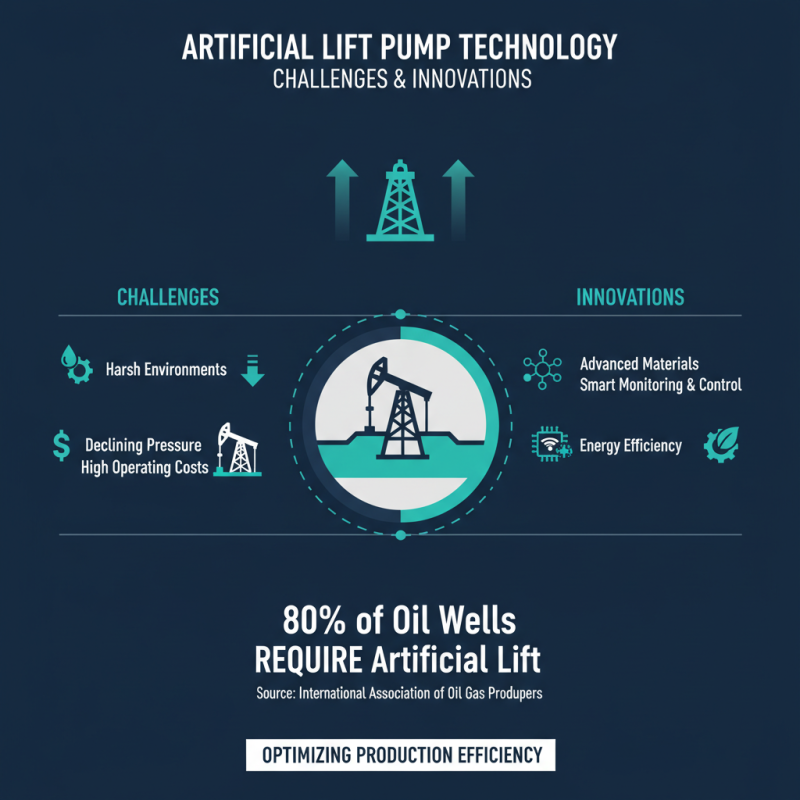
Challenges and Innovations in Artificial Lift Pump Technology
Artificial lift pumps play a critical role in oil extraction, especially in challenging environments. The technology has evolved over the years, driven by the need to optimize production efficiency. As per the International Association of Oil & Gas Producers, around 80% of oil wells require artificial lift to manage production effectively.
The challenges facing artificial lift pumps are significant. Fluid dynamics can vary widely based on the well's geologic features. For example, heavier oils pose a greater challenge for lift systems. A recent study indicated that nearly 40% of lift failures occur due to these variations. New innovations focus on sensor integration and real-time monitoring, crucial for enhancing the reliability of these systems.
Tips: Regular maintenance can prevent unexpected downtime. Monitoring system performance helps in identifying inefficiencies promptly. Emerging technologies, such as machine learning algorithms, aim to forecast lift performance and improve decision-making. These advancements could address challenges, but adoption remains slow in some areas. The industry must continue to innovate to meet growing energy demands.