China Top Flow Pump Manufacturers for Global Buyers
China has become a major sourcing base for flow pump equipment, serving water treatment, agriculture, manufacturing, mining, and energy projects. Global buyers now face a crowded market, with differences in design quality, testing discipline, materials, and after-sales support.
Dr. Lev Nelik, a recognized pump-system specialist, has emphasized, “A pump is only as good as the system in which it operates.” This practical reminder matters when comparing China flow pump manufacturers. A polished catalog cannot replace verified performance. Buyers should examine hydraulic curves, motor efficiency, seal construction, corrosion resistance, and operating temperature limits. They should also request factory test records, product drawings, spare-parts policies, and clear warranty terms.
Details matter.
A stainless-steel pump may suit clean water, yet fail quickly in abrasive slurry. A compact unit may look economical, but consume more energy under continuous operation. Real project conditions often reveal weaknesses that brochures hide. Therefore, supplier evaluation should include factory experience, export references, quality-control procedures, and communication capability. Certifications can support trust, but they should be checked against the actual model and production site.
This guide reviews leading China flow pump manufacturers for global buyers. It considers product range, engineering capability, customization, testing, delivery reliability, and service response. Some rankings may remain debatable, because performance depends on application and operating conditions. That is worth admitting. No single manufacturer fits every project. Careful comparison, technical verification, and a willingness to question attractive claims can lead to a safer and more economical purchasing decision.
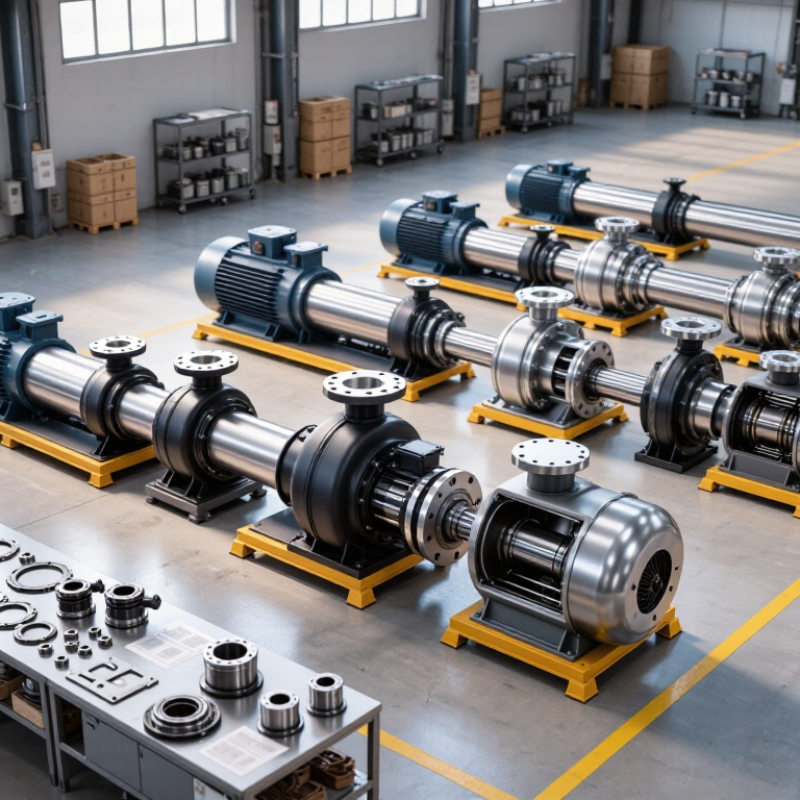
China Flow Pump Manufacturers: Market Scope and Global Buyer Criteria
China’s flow pump manufacturing market covers agricultural irrigation, water treatment, chemical processing, construction, and general industrial circulation. Its scope ranges from compact centrifugal pumps to large systems handling abrasive or high-temperature fluids. Production capacity is broad, but quality can vary between factories. Buyers should examine the actual facility, not only an online catalog.
Experienced purchasers usually compare flow rate, total head, fluid temperature, material compatibility, seal design, and motor efficiency. A pump rated at 80 cubic meters per hour may perform differently under real pipe resistance. Request performance curves based on tested conditions. Ask for vibration readings, noise limits, dimensional drawings, and spare-part availability. Short videos help, but witnessed testing is stronger evidence.
Reliable suppliers should provide traceable component records, inspection procedures, and clear warranty terms. Factory audits can reveal machining limits, assembly cleanliness, and testing equipment. Certification documents deserve careful checking; some are incomplete or outdated. Delivery promises also need practical review, especially for custom impellers or non-standard materials. I have seen technically attractive offers fail because installation data was missing. Buyers should share piping layouts, operating cycles, voltage requirements, and maintenance expectations before approving production. A lower price is not always a lower operating cost.
Top Chinese Manufacturers by Pump Type, Capacity, and Export Reach
China’s pump manufacturing base covers centrifugal, submersible, diaphragm, screw, and magnetic-drive designs. Buyers should compare manufacturers by application, capacity, and verified export performance, not factory size alone.
The U.S. Department of Energy reports that pumping systems can represent about 27% of industrial motor energy use. Efficiency therefore matters more than a low purchase price.
For clean water and municipal networks, centrifugal pumps commonly serve medium and high-flow duties. Submersible models fit drainage, wells, and compact wastewater stations. Process plants often require corrosion-resistant materials, stable sealing, and precise flow control.
Chinese suppliers producing units below 100 m³/h may suit building services and light industry.
Larger facilities should examine models exceeding 1,000 m³/h, with tested head curves and motor efficiency records.
Capacity figures can look impressive. They still need independent verification.
Export reach is another practical filter. ITC Trade Map places China among the leading exporters in HS 8413, covering pumps and liquid elevators. Strong candidates usually provide multilingual manuals, international test certificates, spare-parts planning, and documented installations across several regions.
Ask for factory acceptance test records, noise data, and performance at your actual duty point. A supplier may quote maximum flow, while your system needs reliable flow under pressure. That difference is easy to miss.
No ranking is perfect. Selection should remain evidence-based.
API 610, ISO 5199, and CE Compliance Requirements for Global Buyers
China Top Flow Pump Manufacturers for Global Buyers
API 610, ISO 5199, and CE Compliance Requirements for Global Buyers
Global buyers should treat compliance as a technical selection process, not a logo check. API 610 applies mainly to centrifugal pumps used in petroleum, petrochemical, and gas services. It addresses design, materials, inspection, testing, and reliability. ISO 5199 focuses on technical requirements for centrifugal pumps in industrial applications. The two standards can overlap, but they are not interchangeable.
CE compliance requires a different approach. It confirms conformity with applicable European Union requirements, such as machinery, pressure, or electrical directives. The exact route depends on the pump design and installation. Buyers should request the Declaration of Conformity, technical file references, risk assessment, and test records. A CE mark alone proves little without supporting documents.
Look beyond certificates.
A dependable manufacturer should provide material certificates, hydraulic performance curves, vibration data, pressure test results, and traceable serial numbers. Witness testing can expose unstable flow, excessive vibration, or poor assembly before shipment. Confirm the test standard and acceptance limits in the purchase contract. This detail is often missed.
Supplier evaluations are rarely perfect. A document may look complete while a key annex remains unclear. Ask practical questions about impeller balance, seal selection, spare parts, and field support. Verify whether the proposed pump matches the actual fluid, temperature, pressure, and operating range. Compliance should support reliable operation, not merely satisfy a tender checklist.
Supplier Evaluation: MTBF, Warranty, Lead Time, and Total Cost Metrics
China Top Flow Pump Manufacturers for Global Buyers
When evaluating flow pump manufacturers in China, global buyers should compare MTBF, warranty, lead time, and total cost together. MTBF indicates expected operating reliability, but it is not a guarantee. Ask for test conditions, sample size, and service records. A credible supplier should explain whether the figures came from field use or controlled testing. Request factory acceptance test reports for flow rate, pressure, vibration, and motor temperature. Details matter.
Tips: Build a simple comparison sheet. Record MTBF hours, warranty length, response time, spare-part prices, and confirmed delivery dates. Check warranty exclusions carefully. Dry running, poor installation, and unsuitable liquids may void coverage. Also request two customer references from similar industries. Short evidence beats polished promises.
Lead time should include production, inspection, packing, and transport to your site. Ask for milestone dates, not one vague estimate. Total cost includes energy consumption, installation, maintenance, downtime, and replacement parts. A cheaper pump may use more electricity every hour. That difference grows quietly. I have seen buyers focus on purchase price and overlook service access. I still make that mistake when quotations look attractive. Recheck the assumptions. Require written confirmation of materials, performance tolerance, and after-sales support before approving the order.
China Top Flow Pump Manufacturers for Global Buyers - Supplier Evaluation: MTBF, Warranty, Lead Time, and Total Cost Metrics
Anonymous, non-brand market benchmarks for preliminary supplier comparison
Indicative performance and commercial benchmarks by flow-pump category
| Pump category |
Typical flow range |
Typical head range |
Indicative MTBF* |
Common warranty |
Typical production lead time |
10-year TCO index** |
Best-fit applications |
| End-suction centrifugal |
5–500 m³/h |
10–100 m |
30,000–60,000 operating hours |
12–24 months |
6–14 weeks |
100–125 |
Water supply, HVAC, irrigation, general industrial service |
| Horizontal split-case |
100–2,000 m³/h |
20–180 m |
40,000–80,000 operating hours |
12–24 months |
10–20 weeks |
95–120 |
Municipal water, cooling-water systems, fire-water systems |
| Vertical multistage |
1–180 m³/h |
30–300 m |
25,000–50,000 operating hours |
12–24 months |
5–12 weeks |
105–135 |
Booster sets, reverse-osmosis pretreatment, process water |
| ANSI/API process centrifugal |
5–400 m³/h |
15–150 m |
35,000–70,000 operating hours |
12–18 months |
12–24 weeks |
115–150 |
Chemical processing, petrochemical service, solvent handling |
| Magnetic-drive centrifugal |
1–300 m³/h |
10–120 m |
20,000–45,000 operating hours |
12–24 months |
8–18 weeks |
120–165 |
Corrosive, toxic, volatile, or leakage-sensitive fluids |
| Submersible wastewater |
10–1,500 m³/h |
5–80 m |
20,000–50,000 operating hours |
12–24 months |
8–18 weeks |
100–140 |
Sewage lifting, drainage, sludge transfer, storm-water handling |
Evaluation notes
* MTBF figures are indicative engineering benchmarks under correctly selected duty conditions, clean installation, scheduled maintenance, and operation near the pump's best-efficiency point. They are not guaranteed supplier claims.
** The 10-year total-cost-of-ownership index is normalized to 100 for the lowest-cost category in this comparison. It combines purchase price, energy, routine maintenance, spare parts, downtime exposure, and disposal; it excludes taxes, financing, and unusual site modifications.
Flow and head ranges are broad industry-use ranges rather than limits for every individual model. Final selection should be verified against the certified performance curve, NPSH requirement, fluid properties, materials, motor efficiency, and applicable project standards.
Recommended supplier-verification checklist
| Verification item |
Evidence to request |
Suggested weighting |
| Reliability and MTBF |
Field failure data, duty-cycle assumptions, bearing and seal specifications, test records |
25% |
| Warranty and after-sales service |
Written warranty terms, exclusions, response time, local service coverage, spare-parts policy |
20% |
| Lead time and delivery control |
Production schedule, historical on-time delivery rate, FAT timing, packaging and logistics plan |
15% |
| Energy and operating cost |
Certified efficiency curve, motor efficiency class, control strategy, annual energy estimate |
25% |
| Compliance and documentation |
Material certificates, inspection plan, performance test report, applicable conformity documents |
15% |