How to Choose the Best Water Jet Pump for Your Needs?
Choosing the right water jet pump is crucial for efficiency and effectiveness. In recent studies, it was found that the right pump can enhance performance by up to 30%. Industry expert John Roberts states, "Selecting the appropriate water jet pump is vital for maximizing productivity." This insight captures the essence of making an informed choice.
Water jet pumps vary dramatically in specifications and applications. Factors such as pressure, flow rate, and energy efficiency significantly impact their performance. Most users overlook these details, leading to inefficiencies that could be easily avoided. For instance, a miscalculation in flow rate can result in inadequate cleaning or cutting capabilities.
While many manufacturers tout high performance, it’s essential to critically evaluate these claims. The right selection requires a balance between needs and available options. Without proper understanding, even a seemingly excellent water jet pump could fall short in real-world applications. Thus, gaining a comprehensive understanding is key to making the best choice for your specific needs.

Understanding the Basics of Water Jet Pumps and Their Applications
When selecting a water jet pump, it’s essential to understand its basic principles and various applications. Water jet pumps operate on the principle of using high-pressure water to create a vacuum. This process draws in additional water or other fluids. Their versatility makes them suitable for diverse tasks, from irrigation to wastewater management. Knowing where and how you plan to use the pump is crucial for making the right choice.
Consider the type of materials you’ll be working with. Some pumps are better suited for abrasive substances, while others excel in clean water applications. Assessing the pump’s flow rate and pressure capability is vital. This information will help you match the pump to your specific needs. Don’t underestimate the importance of energy efficiency, too. It can heavily influence operational costs over time. Reflecting on long-term usage may lead you to better decisions.
While the basic function is straightforward, your specific requirements can complicate the selection. Think about the environment. Will the pump be used outdoors? Understanding its limits is essential. Installation can also be a hurdle. Some pumps are easier to set up than others. Evaluate your comfort level with DIY projects. If unsure, consider seeking professional assistance.
Water Jet Pump Performance Comparison
This chart demonstrates the flow rates of various water jet pumps, measured in gallons per minute (GPM). Selecting the right pump depends on your specific requirements, including the desired flow rate and application type.
Key Factors to Consider When Selecting a Water Jet Pump
Choosing the right water jet pump can be challenging. Several key factors come into play. One important aspect is the pump's power. Higher horsepower can provide better performance, but it may also increase energy costs. Understanding your specific needs, like pressure requirements, is crucial.
Another factor is the material of the pump. Many pumps are made from stainless steel. This choice affects durability and maintenance. You need to consider how often you will use the pump. For occasional use, a less durable option might suffice.
Think about the size and weight as well. A lighter pump is easier to move, but a heavier one might offer stability during operation. Finally, assess your budget. It’s easy to overspend on features you may never use. Reflecting on these elements will help you make a more informed choice.
Comparing Different Types of Water Jet Pumps: Pros and Cons
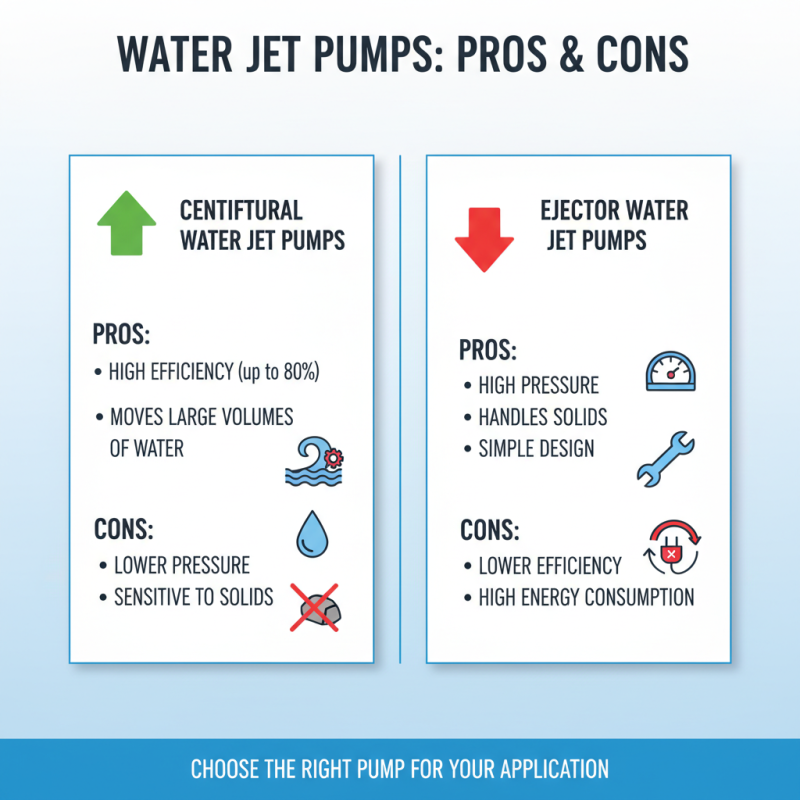
Water jet pumps are popular for various applications, but selecting the right type requires understanding their pros and cons. Centrifugal water jet pumps are known for their efficiency. They excel in moving large volumes of water with relatively low energy consumption. According to a report by the Hydraulic Institute, these pumps can be up to 80% efficient.
Conversely, diaphragm water jet pumps offer versatility. They work well even with abrasive fluids. However, they often require more maintenance. Users may find their performance inconsistent with varying fluid characteristics. A study highlighted that diaphragm pumps can underperform in high-pressure scenarios, which is critical for some applications.
Considerations like flow rate and pressure are vital. A pump that works well in one scenario may not work in another. Many users overlook the importance of these factors. This oversight can lead to operational challenges and increased costs. Inadequate research can make choosing a pump feel overwhelming. Balancing pros and cons is essential when making a decision.
Evaluating Pump Specifications: Pressure, Flow Rate, and Power Requirements
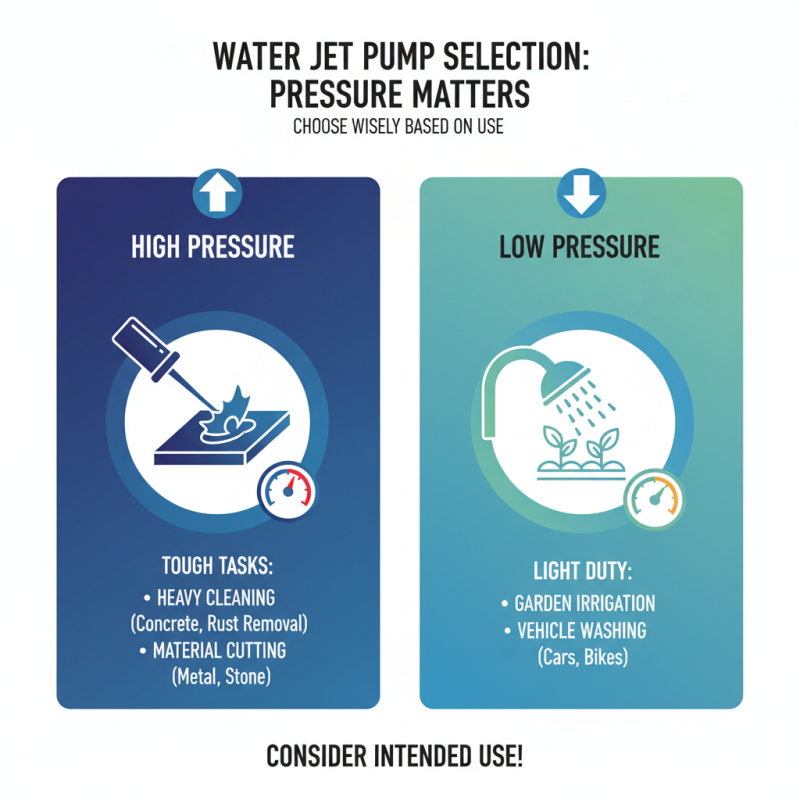
When choosing a water jet pump, specific specifications matter greatly. Pressure is crucial. It determines how forcefully water is expelled. A pump with high pressure is ideal for tough tasks, like cleaning heavy surfaces or cutting materials. Conversely, if the task is light, a lower pressure pump suffices. Always think about the intended use.
Flow rate is another important factor. It indicates how much water the pump can move within a certain timeframe. For large areas, a high flow rate is necessary. If you're just watering a garden, a simpler option would do. Balancing flow rate and pressure can be tricky. Sometimes, excessive flow can lead to inefficiency.
Power requirements should not be overlooked. Powerful pumps often consume more energy. Analyze your electricity supply. Ensure it can handle the pump. Choosing a pump that matches your power capacity can save you from future headaches. It's also wise to consider operational costs. Higher power can mean higher bills. Reflect on what fits your long-term needs.
Industry Standards and Certifications for Water Jet Pumps to Look For
When choosing a water jet pump, understanding industry standards is crucial.
Various certifications indicate performance and safety. Look for pumps that meet or exceed these standards. Common certifications include ISO, CE, and UL. Each one signals a level of reliability. It’s essential to comprehend what these symbols mean.
Pumps with ISO certification often ensure quality management. CE marking indicates compliance with European directives. UL certification is a North American standard for safety. Not every pump carries these credentials. Lack of certification can impact performance. When evaluating, don't overlook documentation.
Consider the specific needs of your project. Are you using it for industrial or residential purposes? Different applications may require varying standards. Reflect on how each standard relates to your requirements. While certifications are important, real-world performance should also guide your choice.