How to Choose a Water Well Jet Pump in 2026?

Choosing a water well jet pump in 2026 starts with the well, not the product label. A pump that looks powerful online may struggle with deep water, narrow piping, or a worn foot valve. Reliable selection depends on measured depth, desired flow, pressure-tank settings, and the distance to each outlet. These details turn a vague purchase into a workable system. They also reveal an uncomfortable truth: the cheapest pump can become expensive when it cycles too often.

This guide explains how shallow-well and convertible jet pumps differ, where each design performs best, and which specifications deserve scrutiny. We will examine horsepower, maximum suction lift, pressure range, motor protection, materials, noise, service access, and energy use. Manufacturer performance curves matter more than impressive marketing numbers. A qualified well technician can confirm static and pumping water levels, inspect the casing, and test voltage before installation. That evidence is more useful than guesswork.

Expect trade-offs. A higher-rated motor does not automatically deliver better household pressure. A compact model may fit a crowded utility room but require more frequent maintenance. Smart monitoring can identify dry-running or abnormal cycling, yet it cannot repair a blocked screen. Even careful buyers can misread a specification sheet. Keep receipts, record measurements, and compare verified performance data. The right choice should provide steady water, manageable operating costs, and safe, serviceable operation for years.
How to Choose a Water Well Jet Pump in 2026?

What a Water Well Jet Pump Does and Where It Fits

How to Choose a Water Well Jet Pump in 2026?

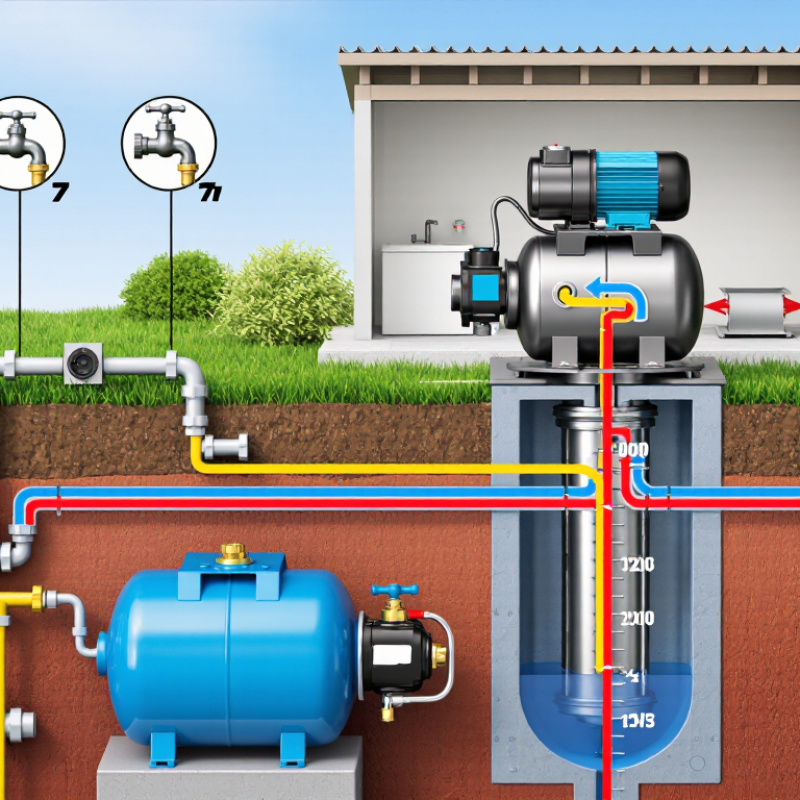
A water well jet pump lifts groundwater from a well to a pressure tank and household pipes. It stays above ground, making inspection easier than with a submersible pump. The pump uses suction for shallow wells. A deep-well jet system adds an ejector assembly below the water level. This design can serve wells beyond ordinary suction limits, but performance depends on pipe size, water level, and friction loss.

The U.S. Geological Survey reported that groundwater supplied roughly half of U.S. public-supply withdrawals in its 2015 national water-use estimate. That figure shows why correct well equipment matters. Measure the static water level, then check the drawdown while several fixtures operate. A pump rated for 25 feet may struggle when the water falls lower during summer use. This is where many selections go wrong. Horsepower alone does not guarantee useful pressure. The pump curve, pressure-switch setting, and tank volume must work together.

Tips: Record the well’s tested flow before buying. Match the pump to the lowest expected water level, not the average level. Ask a qualified well professional to verify the ejector depth and pipe layout. The Water Systems Council also recommends regular inspection of well components and sanitary seals. A small leak can reduce pressure, waste electricity, and remain unnoticed for months. The final choice may still require adjustment after real household use.

How to Assess Your Well’s Depth, Flow, and Water Demand

How to Choose a Water Well Jet Pump in 2026?

Start with accurate well measurements, not guesswork. Record the static water level after the well rests overnight. Then measure the pumping level while water flows. The difference is drawdown. A shallow-well jet pump usually suits lifts up to about 25 feet. Deeper water may require a convertible jet pump and a two-pipe ejector. These limits vary with piping, elevation, and friction. A licensed well professional should confirm the result.

Measure the well’s recovery rate in gallons per minute. The pump should not remove water faster than the well can replenish it. The U.S. Geological Survey reported average domestic water use near 82 gallons per person daily in 2015, excluding many outdoor demands. That figure is only a planning reference. A family using sprinklers, a soaking tub, or several showers needs more capacity. List peak events, such as two showers and a washing machine running together. Then add modest reserve, not excessive pump horsepower. Oversizing can cause short cycling and faster wear.

Tips: Check the well log, pressure-tank size, pipe diameter, and electrical supply. Watch the gauge during a timed flow test. A five-minute test may mislead. Seasonal drought can expose weaknesses. I would reassess demand every few years, because household habits change. USDA NRCS well guidance also emphasizes testing yield, water level, and recovery before final equipment selection.

How to Match Pump Type, Capacity, and Pressure Requirements

How to Choose a Water Well Jet Pump in 2026?

Matching a jet pump begins with water depth, not horsepower. Measure the static water level and the pumping water level separately. A shallow-well jet pump usually suits lifts up to about 25 feet. Deeper wells need a two-pipe ejector system, often reaching approximately 80 feet, depending on well design and friction loss. The Hydraulic Institute recommends evaluating the complete system curve, including elevation, pipe resistance, and required flow.

Capacity must match real household demand. A modest home may need 8–12 gallons per minute, while irrigation can require more. Oversizing creates short cycling, noisy pressure changes, and unnecessary energy use. The U.S. Geological Survey reported that groundwater provided about 26% of total U.S. freshwater withdrawals in 2015. Local aquifer conditions therefore matter. A pump curve cannot replace a field test.

Tips: Record the well recovery rate, pipe diameter, and highest fixture before choosing a model. Select a pressure switch around 30/50 or 40/60 psi when suitable. Set tank precharge about 2 psi below cut-in pressure, with the tank empty. Check the calculation twice. Real wells are rarely perfect. The U.S. Department of Energy also advises comparing pump performance across the expected operating range, rather than selecting by peak horsepower alone.

Which Power, Pipe, and Installation Features Matter Most

How to Choose a Water Well Jet Pump in 2026?
Which Power, Pipe, and Installation Features Matter Most

Choosing a water well jet pump is not simply a horsepower decision. Start with well depth, static water level, household demand, and required pressure. A shallow-well pump usually suits lifting water from limited depths. Deeper wells may need a two-pipe jet system or another pump design. Check the pump curve carefully. More power is not always better. Oversizing can increase cycling, energy use, and pipe stress. Use measured flow needs, not guesswork.

Pipework often decides whether the system performs well. Keep the suction line short, straight, and properly supported. Use the recommended diameter; reducing it may create excessive friction. A foot valve should hold prime and include a suitable strainer. Every threaded joint needs an airtight seal. Even a small suction leak can cause noisy, weak operation. Discharge piping should match the pump outlet and include accessible isolation valves. I would recheck these details before blaming the pump.

Tips: Confirm the well yield with a qualified technician before selecting power. Protect the pump from freezing and rain exposure. Install a pressure gauge near the tank. Prime the system according to the manual. Do not rely on pressure alone; observe actual flow at the farthest outlet. Local plumbing and electrical requirements still matter, and a licensed installer can identify unsafe shortcuts.

How to Choose a Water Well Jet Pump in 2026? – Which Power, Pipe, and Installation Features Matter Most

Selection Dimension Typical Requirement or Range Recommended Choice Why It Matters
Static Water Level Measure the vertical distance from the pump location to the water surface before pumping. Use a shallow-well jet pump when the lift is generally 25 ft (7.6 m) or less. For greater lift, use a deep-well jet configuration or another pump type. Jet pumps must create suction. Atmospheric pressure limits practical suction lift, and friction losses reduce performance further.
Total Pumping Depth Include water-level drawdown, vertical lift to the pressure tank, and pipe friction. For approximately 25–110 ft (7.6–33.5 m) of water lift, select a deep-well jet pump with a correctly matched ejector assembly. Deep-well systems place the ejector below the water level and are not interchangeable with shallow-well installations.
Household Water Demand A small home may need about 6–10 gallons per minute (GPM); larger homes or irrigation zones may require more. Size the pump from the required flow at the total dynamic head, not from horsepower alone. A pump that reaches the target GPM at the required pressure will perform better than a larger motor selected without a system calculation.
Typical Motor Power Common residential jet-pump sizes are approximately 1/2, 3/4, 1, and 1-1/2 horsepower. Use about 1/2–3/4 HP for modest demand and favorable lift; consider 1–1-1/2 HP for higher lift, longer pipe runs, or greater flow requirements. Horsepower is only a starting point. The pump curve must show the required flow at the calculated head and pressure.
Pressure Setting Common pressure-switch settings are 30/50 psi or 40/60 psi. Choose a pressure tank and pump that are rated for the selected cut-in and cut-out pressures. Higher pressure settings increase required pump head and may reduce delivered flow if the pump is not properly sized.
Well and Suction Pipe Use pipe diameters specified by the pump and ejector manufacturer; many residential systems use 1-1/4 in or 1-1/2 in suction piping. Keep the suction line short, straight, airtight, and at least as large as the pump inlet unless the installation manual requires otherwise. An undersized or leaking suction line can cause air entry, loss of prime, noise, and reduced flow.
Discharge Pipe Residential discharge piping is commonly 1 in or 1-1/4 in, depending on flow, distance, and pump connections. Use the largest practical pipe that matches the pump connection and required flow, especially for long runs. Larger pipe reduces friction loss and helps maintain pressure at fixtures and irrigation outlets.
Foot Valve or Check Valve A foot valve is normally installed at the end of a suction line; a check valve may be used where required by the system design. Use a corrosion-resistant, full-flow valve with a strainer and verify that it is accessible for service. The valve helps retain prime and prevents water from draining back into the well.
Pressure Tank Select a tank based on pump flow, pressure-switch settings, and desired drawdown; larger tanks generally reduce cycling. Use a pre-charged bladder tank sized for the pump and set its air pressure according to the pressure-switch cut-in setting. Correct tank sizing protects the motor from frequent starts and improves system stability.
Electrical Supply Many residential pumps use 115 V or 230 V single-phase power; voltage must match the motor rating. Use a dedicated, properly protected circuit with grounding, disconnecting means, and wire size suitable for motor current and cable length. Low voltage, excessive voltage drop, or inadequate protection can cause overheating, nuisance trips, or motor failure.
Pump Location Install the pump in a dry, ventilated, frost-protected area close to the well whenever practical. Provide a rigid, level base with enough clearance for priming, pressure-switch adjustment, drain access, and motor cooling. A protected and accessible location reduces vibration, freezing risk, corrosion, and maintenance time.
Priming Requirement Jet pumps normally require the pump casing and suction piping to be filled with water before initial operation. Install a clearly accessible priming port and verify that all suction connections are airtight. Running a jet pump without adequate water can damage internal components and prevent the system from building pressure.
Water Quality and Materials Sand, sediment, acidic water, and corrosive minerals can shorten pump and valve life. Use suitable pipe and valve materials, add an appropriately sized sediment filter where needed, and avoid placing restrictive filters on the suction side. Contamination and corrosion can reduce flow, damage seals, and increase maintenance requirements.
Noise and Vibration Jet pumps can transmit motor and hydraulic noise through rigid piping and building structures. Use a solid base, flexible connectors where appropriate, correctly supported pipe, and avoid contact between piping and walls. Proper isolation improves comfort and helps prevent fitting fatigue and leaks.
Best Overall Decision Rule The pump must meet the required GPM at total dynamic head, including elevation, pressure, and friction losses. Compare certified pump curves, connection sizes, voltage options, service access, and installation requirements before selecting horsepower. A complete system calculation is more reliable than choosing a pump by motor size, advertised maximum lift, or maximum flow alone.

Note: Values shown are typical residential planning ranges. Actual performance depends on the pump curve, well yield, water level during pumping, pipe length and diameter, elevation, pressure setting, and local electrical and plumbing requirements.

How to Compare Materials, Maintenance, Safety, and Total Cost

Choosing a water well jet pump in 2026 requires more than checking horsepower or purchase price. Material selection affects service life. Cast iron handles demanding conditions, while thermoplastic components resist corrosion and suit many shallow-well systems. Stainless steel can offer stronger corrosion protection, but it usually increases the initial cost. Check the well water’s mineral content before deciding.

Maintenance should be simple enough for a homeowner to manage safely. Look for accessible filters, clear pressure controls, and replaceable seals. Keep the intake screen clean, inspect connections, and watch for unusual vibration. Small leaks often become expensive failures. I once underestimated how quickly a neglected pressure switch could damage a pump. That mistake changed my maintenance schedule.

Safety deserves practical attention. Install proper grounding and weather protection. Never inspect electrical parts with power connected. A qualified technician should verify wiring, pressure settings, and well conditions when uncertainty exists. Total cost includes electricity, fittings, labor, winter protection, and replacement parts. A cheaper pump may consume more power or require frequent repairs. Compare estimated operating hours and service costs over five years. Do not trust optimistic calculations. Real household demand varies, and an undersized pump may run continuously. Reliability is worth paying for, but only when the design matches the well.