How to Choose the Right Jet Pump for Your Needs?
Choosing the right jet pump is essential for maximizing your water system's efficiency. Many homeowners overlook this crucial decision. A suitable jet pump can enhance water flow and pressure. The right choice ensures you have sufficient water for various applications, from irrigation to household use.
When selecting a jet pump, consider factors like water depth and required flow rate. Not all jet pumps are created equal. They vary significantly in performance and features. Research is fundamental. You may encounter complexities that seem overwhelming at times. It's important not to rush this choice, as it can impact your daily activities greatly.
Some may feel tempted to choose based solely on price. However, investing in a reliable, high-quality jet pump often yields better long-term benefits. Ensure your selection process is rooted in reliable research and expert recommendations. Don't hesitate to seek out reviews and consult with professionals. This step often leads to a more satisfying outcome.
Understanding the Basics of Jet Pumps and Their Applications
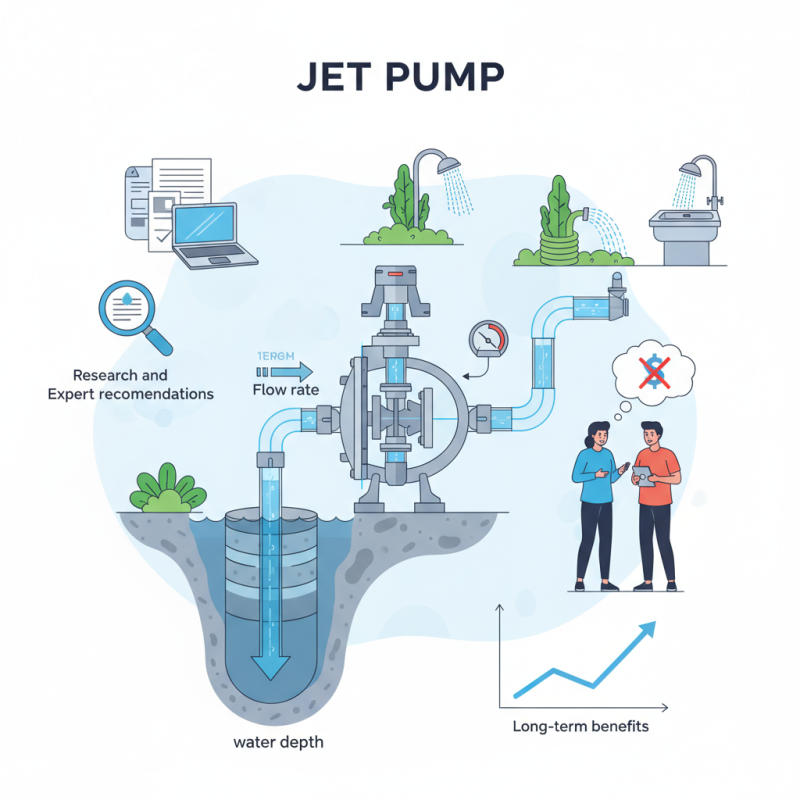
Understanding jet pumps requires a look at how they function. Jet pumps are primarily used to draw water from wells. They utilize a jet process to create a vacuum, which lifts water up to the surface. This method is efficient for shallow wells and garden irrigation systems.
According to a report by the National Ground Water Association, nearly 21 million households in the U.S. rely on wells for their water supply, highlighting the importance of choosing the right pump.
Jet pumps come in various configurations suited for different applications. They can be single-stage or multi-stage, depending on the pressure requirements. A 2022 analysis indicated that multi-stage jet pumps are gaining popularity for their efficiency in high-demand applications. However, using a poorly chosen pump can lead to significant inefficiencies. Many users overlook aspects such as flow rate and depth of the water source, leading to suboptimal performance.
While durable, jet pumps do require maintenance. Users sometimes underestimate this aspect, resulting in decreased functionality. Regular inspections can prevent breakdowns. This knowledge is crucial, especially for those new to jet pumps. Ignoring maintenance advice can lead to costly repairs and downtime. Understanding these basics is vital before making a decision.
Identifying Your Water Source and Its Requirements
When selecting a jet pump, understanding your water source is crucial. Is your source a well, pond, or a municipal supply? Each type brings unique needs. A deep well requires a different pump compared to a shallow one. The water's location affects pressure and flow. For instance, a surface water source may offer less pressure but more volume.
Next, analyze the quality of the water. Is it clean, or does it contain impurities? Contaminated water necessitates additional filtration. This could complicate pump choice. Furthermore, consider the distance water needs to travel. Longer distances mean more pressure is necessary. It's easy to misjudge; a pump that seems adequate may fall short when faced with actual demand.
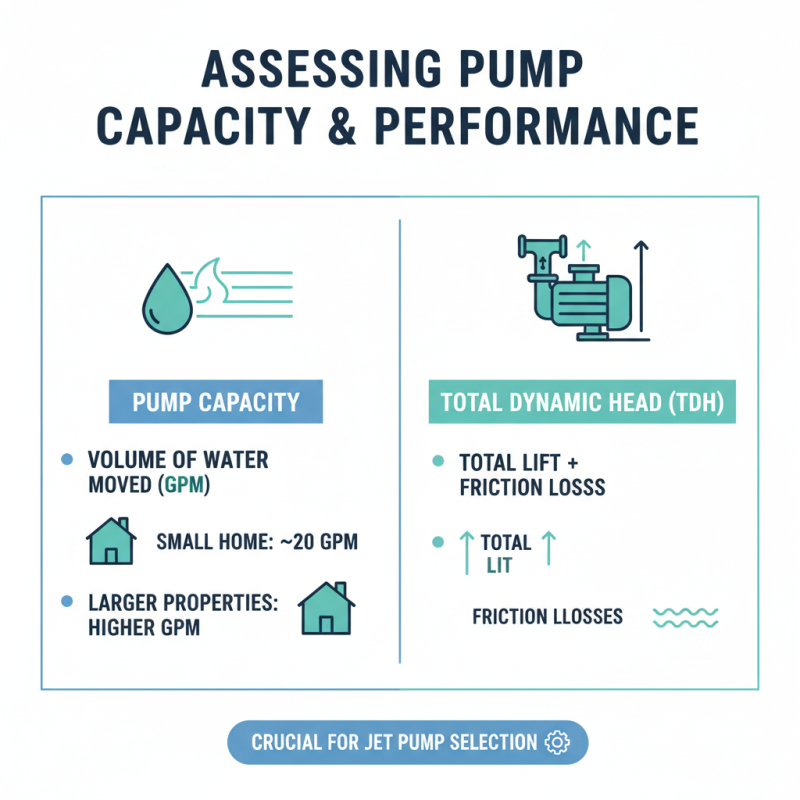
Reflect on your specific needs. How much water do you use daily? Will the pump meet your household or agricultural requirements? Overestimating can lead to wasted resources. Underestimating may cause frustration. Balancing these factors ensures you choose a suitable jet pump. Make sure to re-evaluate these aspects regularly, especially if your needs change.
Comparison of Jet Pump Types Based on Water Delivery Capacity
Evaluating Energy Efficiency and Operating Costs
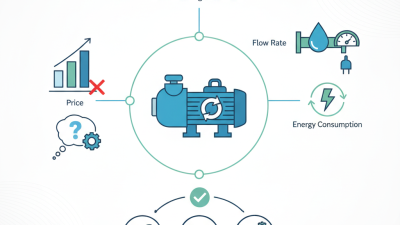
Evaluating energy efficiency and operating costs is crucial when selecting a jet pump. A study by the U.S. Department of Energy reveals that pumps account for about 20% of industrial electricity use. Optimizing energy consumption can lead to substantial savings. For example, an energy-efficient jet pump may reduce power usage by up to 30%. This statistic reinforces the importance of thorough evaluation.
Operating costs extend beyond electricity. Maintenance can impact the overall budget. Regular upkeep prevents costly breakdowns and extends pump life. A report from the Hydraulic Institute notes that inefficient pumps can increase operational costs by 50% over time. Selecting a jet pump with lower operating expenses can yield long-term benefits.
Always examine performance curves and specifications. These details reveal pump efficiency at varying flow rates. Inadequate efficiency may not be immediately apparent but can accumulate hidden costs. Sometimes, it’s wise to revisit assumptions about energy needs. Reliable assessments combine both data and experience.
Considering Installation and Maintenance Factors
When considering a jet pump, installation and maintenance are crucial factors. A proper installation ensures optimal performance and longevity. Choose a location that is dry and protected from the elements. Ensure the area has enough space for maintenance and potential repairs. Access to power sources is also important.
Tips for installation: Check the local water table level. It influences how deep you need to install the pump. Misjudging this can lead to inefficient water access. Also, ensure the pipes are securely connected. Leaks can waste water and reduce efficiency.
Regular maintenance keeps your pump running smoothly. Inspect the pump regularly for signs of wear. Listen for unusual sounds that might indicate problems. Dirty filters can affect performance. Change them regularly to maintain efficiency. Keep in mind that neglecting maintenance can lead to bigger, more costly issues later.
How to Choose the Right Jet Pump for Your Needs? - Considering Installation and Maintenance Factors
| Criteria |
Description |
Importance Level |
| Water Source Type |
Determine if the water source is a well, pond, or other |
High |
| Flow Rate |
Required gallons per minute (GPM) for your applications |
High |
| Pump Depth |
How deep the water source is for suction considerations |
Medium |
| Installation Environment |
Indoor vs Outdoor, and space constraints |
High |
| Energy Efficiency |
Pump’s energy consumption and cost-effectiveness |
Medium |
| Maintenance Requirements |
Frequency and complexity of maintenance tasks |
High |
| Noise Level |
Operational noise and its impact on surroundings |
Medium |
| Warranty and Support |
Length of warranty and availability of customer support |
High |