Top 10 Artificial Lift Pump Types for Global Buyers?

Choosing an artificial lift pump is not a simple catalog exercise. Global buyers must match pump design with reservoir pressure, fluid behavior, well depth, power availability, and maintenance capability. A system that performs well in a shallow Middle Eastern oil well may struggle in a remote offshore field. Temperature, sand, gas interference, corrosion, and unstable electricity can change the decision completely.

James F. Lea, a widely respected artificial-lift specialist, is often associated with this practical principle: “There is no universal best artificial lift method.” That warning deserves attention. The right artificial lift pump should fit the well’s real operating conditions, not merely its advertised efficiency. A progressing cavity pump may handle viscous fluids effectively. An electric submersible pump may deliver high volumes from deeper wells. Rod pumps can offer familiar maintenance procedures and broad field support. Gas lift systems may suit wells with available injection gas and changing production rates.

This guide examines ten major pump types and lift approaches used by international operators, contractors, and equipment buyers. Each section considers operating range, installation demands, energy use, fluid tolerance, service access, and lifecycle cost. Practical details matter. A pump exposed to abrasive sand needs different protection from one handling clean condensate. A remote site may value repairability more than peak output.

Some choices remain uncertain. Manufacturer data can look impressive, yet field results may vary. Buyers should verify test conditions, spare-part availability, local technicians, and total ownership cost before approving a purchase. Performance begins with honest well data.
Top 10 Artificial Lift Pump Types for Global Buyers?

What Artificial Lift Pumps Are and When Oil Wells Need Them

Artificial lift pumps help move crude when a reservoir can no longer provide enough pressure. They add energy downhole or at the surface. Natural flow often weakens as pressure falls, water cut rises, or tubing friction increases. SPE technical literature commonly places artificial lift use in roughly 80–90% of mature producing wells. The exact share varies by basin and well design.

The main options include sucker-rod pumps, electric submersible pumps, gas lift, progressing cavity pumps, hydraulic piston pumps, jet pumps, plunger lift, and several rod-free systems. Each suits different conditions. Sucker-rod pumps fit many shallow and moderate-rate wells. Electric submersible pumps suit high liquid volumes, but power supply and gas handling matter. Gas lift can work across deviated wells, though compression costs may become significant. Progressing cavity pumps handle viscous fluids, but abrasive solids can damage the stator.

Operators usually consider artificial lift after declining bottomhole pressure, unstable flow, or rising fluid loading appears. The IEA’s Oil 2024 report projects global oil demand at 105.4 million barrels per day in 2030, about 3.2 million barrels per day above 2023. That demand makes recovery from mature assets more valuable. Still, higher output is not always better. A pump running too fast may increase water production, rod wear, or sand intake. That is the uncomfortable part. Selection should follow measured pressure, fluid properties, deviation, power availability, and intervention history. A technically elegant choice can still fail underground.

The Ten Main Artificial Lift Pump Types Used Worldwide

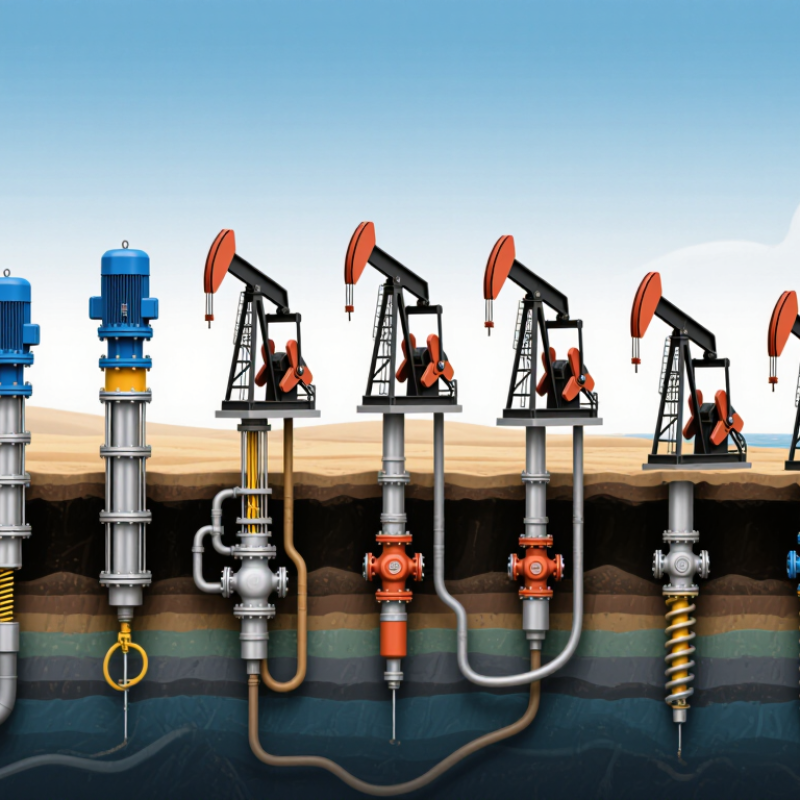
Artificial lift selection changes with depth, fluid properties, reservoir pressure, and available power. The ten main artificial lift pump types used worldwide include beam rod pumps, tubing pumps, insert rod pumps, casing pumps, electric submersible pumps, progressing cavity pumps, hydraulic piston pumps, hydraulic jet pumps, plunger lift systems, and gas lift systems.

Beam rod pumps remain practical in many mature fields, especially where maintenance crews understand surface equipment. Tubing, insert, and casing pumps suit different workover strategies and production rates. Electric submersible pumps deliver high volumes from deep wells, but their motors dislike gas interference and unstable power. Progressing cavity pumps handle viscous fluids and sand reasonably well. Their elastomers can fail early in harsh fluids. That detail is often underestimated.

Hydraulic piston pumps support flexible placement and controlled downhole operation. Hydraulic jet pumps tolerate some difficult well conditions, although their efficiency may disappoint. Plunger lift uses well pressure and a moving plunger to unload liquids. Gas lift injects gas through valves rather than using a conventional pump. It performs well when compression capacity is reliable. Field engineers should compare measured drawdown, water cut, gas fraction, solids, temperature, and failure history. A neat selection table can still mislead. Pilot testing, verified operating data, and local safety requirements usually provide better decisions than production targets alone.

How Each Pump Type Works, Including Strengths and Limitations

Top 10 Artificial Lift Pump Types for Global Buyers?

Artificial lift starts when reservoir pressure cannot move fluids naturally. Electric submersible pumps use downhole motors and centrifugal stages. They deliver high rates, but gas interference and heat shorten service life. Sucker-rod pumps lift fluids with a reciprocating plunger. They are inspectable and efficient, yet limited by depth, deviation, and rod wear. Progressive cavity pumps move fluid through a rotating rotor and elastomer stator. They handle viscous fluids well, although sand and chemical swelling remain serious weaknesses.

Gas-lift valves inject gas to reduce fluid density. This method suits deviated wells and variable rates, but needs compression capacity. Plunger lift uses a traveling plunger and reservoir gas. It is low-cost, but unstable liquid loading can interrupt production. Hydraulic jet pumps use venturi pressure to entrain fluid. They tolerate high temperatures and no downhole moving parts, but consume power at surface. Hydraulic piston pumps use a reciprocating power fluid piston. They provide strong depth performance, though maintenance is more complex. Beam pumps, insert pumps, tubing pumps, and twin-screw pumps complete the ten, serving shallow wells, sandy fluids, or multiphase streams with different trade-offs.

Tips: Match the pump to fluid rate, gas fraction, sand, depth, and power availability. EIA well-performance data shows steep early production declines in many tight-oil wells, making flexible control valuable. SPE technical papers repeatedly emphasize surveillance, operating envelope, and failure analysis. A 2024 IEA oil-market report also highlights mature-field decline pressure. Still, reports do not replace field evidence. A pump that performs beautifully on paper may fail after one abrasive workover. Capture intake pressure, vibration, fluid level, and failure history before changing equipment.

Top 10 Artificial Lift Pump Types for Global Buyers

How each lift system works, including typical strengths and limitations

Comparative engineering scores from 1 to 5. Higher scores indicate stronger general suitability for the stated operating condition. Actual performance depends on well depth, fluid properties, gas volume, solids, deviation, temperature, and completion design.

Lift Type How It Works Typical Strengths Common Limitations
Sucker-Rod Pump A surface unit reciprocates a rod string that drives a downhole plunger and traveling valves. Mature technology, easy surface inspection, broad service availability, and good efficiency in moderate-rate wells. Rod and tubing wear, limited gas handling, and reduced suitability for highly deviated wells.
Electric Submersible Pump A downhole electric motor drives a multistage centrifugal pump to lift large fluid volumes. High production rates, compact downhole installation, and strong deep-well capability. Sensitive to free gas, solids, high temperature, power quality, and costly workovers.
Continuous Gas Lift Compressed gas is injected continuously into the tubing-casing annulus to reduce hydrostatic pressure. Excellent gas tolerance, strong deep-well performance, and suitability for deviated completions. Requires reliable compression, injection-gas availability, and careful valve design.
Intermittent Gas Lift Large gas slugs are injected periodically to push accumulated liquid to the surface. Useful for low-rate wells and compatible with substantial gas production. Produces cyclic flow, needs timing optimization, and may cause unstable surface production.
Progressing Cavity Pump A helical rotor turns inside an elastomeric stator, transporting fluid through sealed cavities. Good for viscous oil, emulsions, and moderate solids; provides relatively smooth flow. Elastomer compatibility, temperature limits, and gas interference can restrict service life.
Plunger Lift A free-traveling plunger separates gas and liquid and rises through the tubing using reservoir or injected gas energy. Low operating cost, strong gas tolerance, and effective liquid unloading in gas wells. Needs sufficient gas energy, suitable tubing geometry, and produces intermittent flow.
Hydraulic Jet Pump A high-pressure power fluid passes through a nozzle, creating a Venturi effect that entrains and lifts produced fluids. No downhole moving parts, good deviation tolerance, and flexible deployment or retrieval. Requires power-fluid equipment, can have lower efficiency, and needs careful nozzle sizing.
Hydraulic Piston Pump Pressurized hydraulic power fluid drives a downhole piston that displaces production fluid. Suitable for deep or deviated wells and adaptable to variable production rates. More complex surface equipment, power-fluid handling requirements, and maintenance needs.
Reciprocating Hydraulic Pump Hydraulic power drives a reciprocating downhole piston or plunger to create positive displacement. Positive-displacement lifting, useful depth capability, and controllable pumping action. Requires clean power fluid, specialized equipment, and more complex troubleshooting.
Electric Submersible Progressing Cavity Pump A downhole electric motor rotates a progressing-cavity pump, combining electric drive control with positive-displacement lifting. Handles viscous fluids better than centrifugal systems and can provide controlled, smooth production. Downhole motor, cable, elastomer, temperature, and free-gas limitations can affect reliability.

How to Compare Pump Performance, Costs, and Operating Conditions

Choosing among artificial lift pumps requires more than comparing catalog rates. Electric submersible pumps suit high liquid volumes and deeper wells, but they demand reliable power and careful heat management. Rod pumps often tolerate variable production and simpler field repairs. Progressive cavity pumps handle viscous fluids and solids, while gas lift performs well where compression capacity already exists.

Operating conditions decide real performance. Check fluid viscosity, gas fraction, sand loading, pump depth, deviation, and expected drawdown. A pump producing 2,000 barrels per day may lose efficiency when free gas enters the intake. The U.S. Energy Information Administration reported that U.S. crude oil production averaged about 13.2 million barrels per day in 2024, increasing pressure to optimize mature assets and energy use. Bigger output is not automatically better.

Costs should include installation, power, workovers, controls, and lost production. Grand View Research estimated the global artificial lift systems market at more than USD 9 billion in 2023, reflecting strong demand for lifecycle optimization. SPE technical papers frequently show that artificial lift selection depends on well-specific nodal analysis, not pump price alone.

A low-cost rod system can become expensive after repeated tubing failures. An electric system may deliver excellent rates, yet its power bill and replacement logistics can change the economics.

The cheapest quote can be a trap. Not always. Compare expected run life, efficiency at declining rates, spare-part access, and technician experience. Then challenge the model with dirty fluid, unstable power, and a late-life production forecast.

What Global Buyers Should Check Before Selecting a Pump

Selecting among the top ten artificial lift pump types requires more than comparing catalog rates. Global buyers should verify depth, fluid viscosity, gas-oil ratio, sand content, temperature, casing size, and available power. A rod pump may suit mature, low-rate wells, while an electric submersible pump may handle higher volumes. Progressive cavity, hydraulic piston, hydraulic jet, plunger lift, gas lift, diaphragm, and other systems each demand different operating conditions.

Start with measured well data, not optimistic forecasts. The U.S. Energy Information Administration reported average American crude production of about 13.2 million barrels per day in 2024. That scale increases pressure on uptime, energy use, and intervention planning.

The International Energy Agency’s Oil 2024 report projects global oil demand will reach approximately 105.4 million barrels per day by 2030. Buyers should therefore examine lifecycle performance, not only initial price.

Ask for tested efficiency curves, expected run life, failure history, spare-parts availability, and local technical support. Check whether the pump can tolerate solids, frequent starts, voltage variation, and changing fluid levels. A 3,000-meter well with high gas content may punish an otherwise attractive design. Standards such as ISO 14224 can improve failure-data comparisons across suppliers. Still, no ranking survives poor field data. A spreadsheet can miss corrosion, transport delays, or limited workshop skills. That is where selection becomes uncomfortable, and careful buyers should challenge their own assumptions.