China’s gas jet pump manufacturing sector deserves closer attention as oilfield operators seek reliable artificial-lift solutions. Gas jet pump systems can handle abrasive fluids, variable production rates, and difficult well conditions. These advantages matter in mature fields, where equipment faces sand, heat, and unstable pressure.
The U.S. Energy Information Administration reported that China produced approximately 4.2 million barrels of crude oil daily in 2023. It also recorded China’s substantial dependence on imported crude. These figures underline the importance of efficient domestic production equipment. The International Energy Agency’s Oil 2024 report also identifies China as a major driver of global oil-demand changes. However, public data rarely separates gas jet pump sales from broader artificial-lift equipment. The evidence is useful, but incomplete.
As artificial-lift specialist James F. Lea observed, “There is no single best artificial lift method for all wells.” That principle should guide any comparison of Chinese manufacturers. A credible ranking should examine nozzle design, pressure recovery, material quality, machining accuracy, field testing, and after-sales support. It should also check API-related quality systems and documented project experience, not only catalog claims. Some manufacturers may offer impressive stainless-steel assemblies, while others provide stronger engineering support or faster replacement parts. A low purchase price can hide higher operating costs. This article will compare leading Chinese gas jet pump manufacturers through technical capability, export experience, customization, and service reliability. Some conclusions may remain imperfect, because transparent market data is limited. That limitation deserves attention, not concealment.
When researching gas jet pump manufacturers in China, buyers should understand the equipment before comparing suppliers. A gas jet pump uses high-pressure gas to move liquid without a conventional rotating motor. It is common in oil production, well dewatering, and selected industrial transfer systems.
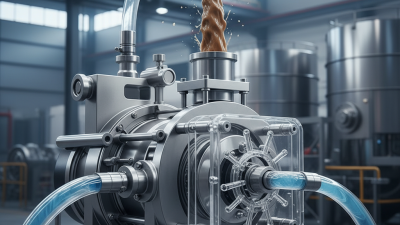
The operating principle is straightforward. Compressed gas enters a small nozzle and accelerates sharply. Its velocity creates a low-pressure zone near the suction inlet. This pressure difference draws production fluid into the pump. The gas and liquid then mix inside a throat section. A diffuser slows the mixture and converts part of its velocity into pressure. The combined stream can then travel toward the surface or a processing vessel.
The simple picture is useful, but real systems are less tidy. Gas temperature, liquid viscosity, sand content, and back pressure can change performance quickly. A pump that works well with clean water may struggle with abrasive fluid. I would request verified flow curves, nozzle dimensions, material certificates, and test conditions from any Chinese manufacturer. Factory testing should show injection pressure, suction pressure, discharge pressure, and gas consumption. Those details reveal more than a polished catalog.
There are no moving parts inside the jet section. That can reduce mechanical wear and simplify maintenance. However, the system still needs reliable valves, piping, separators, and pressure controls. Incorrect sizing may waste gas or deliver disappointing lift. Field measurements matter. Even experienced engineers should allow room for uncertainty when well conditions change.
Choosing a gas jet pump manufacturer requires more than comparing catalog prices. Evaluate its engineering experience with your gas composition, operating pressure, temperature, and flow rate. A capable manufacturer should explain nozzle design, suction performance, material selection, and expected efficiency in practical terms.
Ask for test records from a full-scale or representative pump. Check whether the report includes inlet pressure, motive-gas pressure, suction pressure, flow rate, and measured results. Inspect the production site if possible. Look for CNC equipment, dimensional inspection tools, welding controls, and traceable material certificates. Technical drawings should show tolerances, surface finishes, connection sizes, and maintenance access. References from similar industrial applications add useful evidence, but they should be verifiable.
Tips: Request a sample calculation before signing. Compare the predicted performance with your operating data. Ask how the manufacturer handles vibration, erosion, blocked passages, and performance decline. Confirm response times for spare parts and technical support. A factory may offer an attractive price yet lack testing depth. That is easy to miss. I would also ask for a small design revision after technical review; the response often reveals whether its engineers listen carefully or simply repeat standard specifications. Do not judge professionalism from polished brochures alone. Witnessed testing, clear records, and honest limits matter more.
China’s gas jet pump manufacturing base serves oilfields, gas processing, chemical plants, and industrial vacuum systems. The International Energy Agency’s Gas 2024 report identified China as a major source of global gas-demand growth in 2023. That expansion increases demand for reliable, locally supported equipment.
Leading Chinese manufacturers typically combine hydraulic design, precision machining, and field service. Their capabilities may include nozzle and throat optimization, mixing-chamber fabrication, skid integration, and high-pressure performance testing. Some workshops use computational fluid dynamics before cutting metal. Others depend heavily on proven drawings. That difference matters.
According to China’s National Bureau of Statistics, natural-gas output reached about 246.4 billion cubic meters in 2024. This large operating base encourages suppliers to improve flow stability, erosion resistance, and maintenance access. Buyers should request test curves, material certificates, dimensional inspection records, and clear operating limits. Stainless steel, nickel alloys, and specialized coatings may suit corrosive or abrasive service, but material selection must follow the actual fluid composition.
Field experience reveals an uncomfortable detail. A pump can meet laboratory figures yet perform poorly after installation. Poor alignment, unstable motive-gas pressure, or unsuitable piping often causes the problem. Leading suppliers therefore provide commissioning guidance, replacement-part drawings, and response support. However, public brochures rarely prove long-term reliability. Independent testing and references from comparable installations remain essential.
| Anonymous Manufacturer Profile | Primary Product Focus | Typical Gas Service | Typical Motive-Gas Pressure | Typical Suction Pressure | Typical Discharge Pressure | Indicative Capacity Range | Common Construction Materials | Engineering and Manufacturing Capabilities | Quality and Export Documentation |
|---|---|---|---|---|---|---|---|---|---|
| Profile A High-Capacity Process Supplier |
Custom gas ejectors, jet compressors, multi-stage ejector systems and complete vacuum packages | Air, nitrogen, steam, natural gas, hydrogen-rich gas and process off-gas | 0.6–10 MPa(g) | Approximately 0.01–0.50 MPa(a), depending on stage configuration | 0.10–2.50 MPa(g) | Approximately 100–10,000 Nm³/h | Carbon steel, stainless steel, duplex stainless steel and nickel-alloy options | Process sizing, CFD-supported nozzle design, CNC machining, welded assemblies, multi-stage skid integration and performance testing | Inspection plans, material certificates, pressure-test records, dimensional reports and export packing documentation |
| Profile B Chemical and Petrochemical Specialist |
Gas jet pumps for vacuum generation, gas circulation, absorption, stripping and vapor recovery | Hydrocarbon vapor, refinery gas, corrosive process gas, nitrogen and mixed gases | 0.4–8 MPa(g) | Approximately 0.02–0.60 MPa(a) | 0.10–1.60 MPa(g) | Approximately 50–5,000 Nm³/h | 304/316 stainless steel, duplex grades, carbon steel with lining and corrosion-resistant alloys | Application-specific material selection, nozzle and diffuser optimization, flange customization and compatibility with process piping systems | Material traceability, welding procedure records, non-destructive testing reports and factory acceptance test support |
| Profile C Industrial Gas Equipment Supplier |
Single-stage gas ejectors, compact jet pumps and packaged vacuum units for general industry | Compressed air, nitrogen, carbon dioxide, natural gas and non-corrosive process gases | 0.3–6 MPa(g) | Approximately 0.03–0.70 MPa(a) | 0.10–1.20 MPa(g) | Approximately 10–1,500 Nm³/h | Carbon steel, 304 stainless steel and 316 stainless steel | Standardized designs, short-run fabrication, threaded or flanged connections and basic skid-mounted assemblies | Product drawings, inspection certificates, pressure-test reports and standard commercial export documents |
| Profile D Vacuum System Integrator |
Multi-stage ejector trains, surface condensers, separators and integrated vacuum systems | Steam, air, water vapor, solvent vapor and mixed process gases | 0.5–7 MPa(g) | Approximately 0.005–0.30 MPa(a) | 0.10–1.50 MPa(g) | Approximately 80–8,000 Nm³/h | Carbon steel, stainless steel, titanium and selected alloy materials | Complete system engineering, stage matching, condenser sizing, separator design, piping layout and factory package testing | Process data sheets, general arrangement drawings, commissioning guidance, test documentation and installation manuals |
| Profile E Metallurgy and High-Temperature Supplier |
Heavy-duty gas jet pumps for furnaces, metallurgical lines, heat treatment and high-temperature gas circulation | Nitrogen, argon, hydrogen-containing gas, combustion gas and high-temperature process gas | 0.4–5 MPa(g) | Approximately 0.05–0.80 MPa(a) | 0.10–1.00 MPa(g) | Approximately 30–3,000 Nm³/h | Heat-resistant stainless steel, nickel alloys, carbon steel and refractory-lined sections | High-temperature material selection, thermal expansion allowances, reinforced nozzles, customized supports and heat-resistant fabrication | Heat-treatment records, material certificates, weld inspection documents and application-specific inspection reports |
| Profile F OEM and Custom Fabrication Supplier |
OEM gas jet pumps, replacement ejectors, special geometry nozzles and customer-drawing production | Application-dependent; commonly air, nitrogen, steam and process gas mixtures | 0.2–10 MPa(g), subject to design verification | Approximately 0.01–0.80 MPa(a) | 0.10–2.00 MPa(g) | Approximately 5–4,000 Nm³/h | Carbon steel, 304/316 stainless steel, duplex stainless steel and customer-specified alloys | Reverse engineering, drawing conversion, prototype production, CNC turning, precision boring and small-to-medium batch manufacturing | Dimensional inspection, pressure testing, first-article reports and customer-specific quality documentation |
China’s leading gas jet pump manufacturers should be judged by evidence, not catalog size. Quality begins with material traceability, dimensional control, and documented performance tests. ISO 9001 certification helps, but it is not proof of field reliability. Ask for nozzle inspection records, pressure-test results, and measured entrainment ratios. Small paperwork gaps can become expensive during installation.
Technology separates capable suppliers from ordinary fabricators. Strong manufacturers use CFD modeling to refine nozzle geometry and reduce pressure loss. They also explain operating limits, including suction pressure, temperature, and gas composition. The IEA’s Energy Efficiency 2023 report states that industry uses about 37% of global final energy. That makes efficiency more than a technical detail. It affects operating cost every day. Still, CFD images can look impressive while site performance disappoints.
Pricing requires a like-for-like comparison. Include materials, testing, spare nozzles, export packing, and commissioning support. A cheaper quotation may exclude critical services. The U.S. Department of Energy identifies pumping systems as major industrial electricity users, so lifecycle cost deserves more weight than purchase price. Service quality is visible in response times, engineering drawings, and replacement-part availability. Field experience matters. I would also question suppliers promising identical efficiency across every application; real process conditions are rarely so cooperative.
The chart compares anonymized supplier groups using a normalized 100-point benchmark across product quality, technology capability, pricing competitiveness, and after-sales service. Higher scores indicate stronger overall performance; pricing is scored by competitiveness, not by absolute price.
Choosing a Chinese gas jet pump manufacturer requires more than comparing quotations. Confirm the supplier’s engineering experience with your gas composition, suction pressure, discharge pressure, and operating temperature. Request tested performance curves, not only catalog values. A small mismatch in nozzle diameter can reduce entrainment and increase energy use.
The ISO Survey 2022 recorded more than 426,000 ISO 9001 certificates in China. Certification helps, but it does not prove ejector expertise. Check whether the factory maintains calibrated pressure gauges, flow meters, and vacuum instruments. Ask for recent factory acceptance test records, material certificates, welding procedures, and dimensional inspection reports. For corrosive service, verify alloy selection and sealing details. Stainless steel is not always sufficient.
Industry reports from MarketsandMarkets continue to show steady global growth in industrial pump demand, driven by energy, chemical, and process industries. This suggests stronger manufacturing capacity, but also wider quality variation. Compare at least three technical proposals using the same duty points. Evaluate response time, spare-parts availability, export packaging, and commissioning support. A supplier that answers quickly may still lack field experience. I would also inspect one operating reference, preferably with similar gas conditions. Reported efficiency figures can be optimistic. Independent testing is worth the extra cost.