
What Are the Top Types of Hydraulic Fluid Pumps?
Choosing a hydraulic fluid pump begins with understanding what the system must do. A pump moves fluid; pressure develops when the circuit resists that flow. Fluid-power author Anthony Esposito’s teaching is often summarized by this practical principle: “A pump produces flow; system resistance creates pressure.” It is a useful starting point, though real installations add heat, leakage, and changing loads.
The main pump families each solve different problems. Gear pumps are compact and straightforward, making them common in mobile equipment and basic power units. Vane pumps often run smoothly and quietly, which can suit industrial machinery. Piston pumps, including axial and radial designs, can support higher pressures and offer strong control over flow. Screw pumps are valued in applications where steady, low-pulsation delivery matters. No single type wins everywhere.
Picture an excavator lifting a bucket: its pump must respond to load, operating speed, and available power. A factory press has different demands, often including precise control and long duty cycles. Engineers compare pressure and flow requirements, fluid viscosity, noise, efficiency, maintenance access, and total operating cost before selecting a pump. Specifications help, but they do not tell the whole story. A pump that looks ideal on paper may perform poorly with unsuitable fluid or neglected filtration. The sections ahead compare the top types of hydraulic fluid pump, their strengths, limitations, and practical selection points. The details matter.
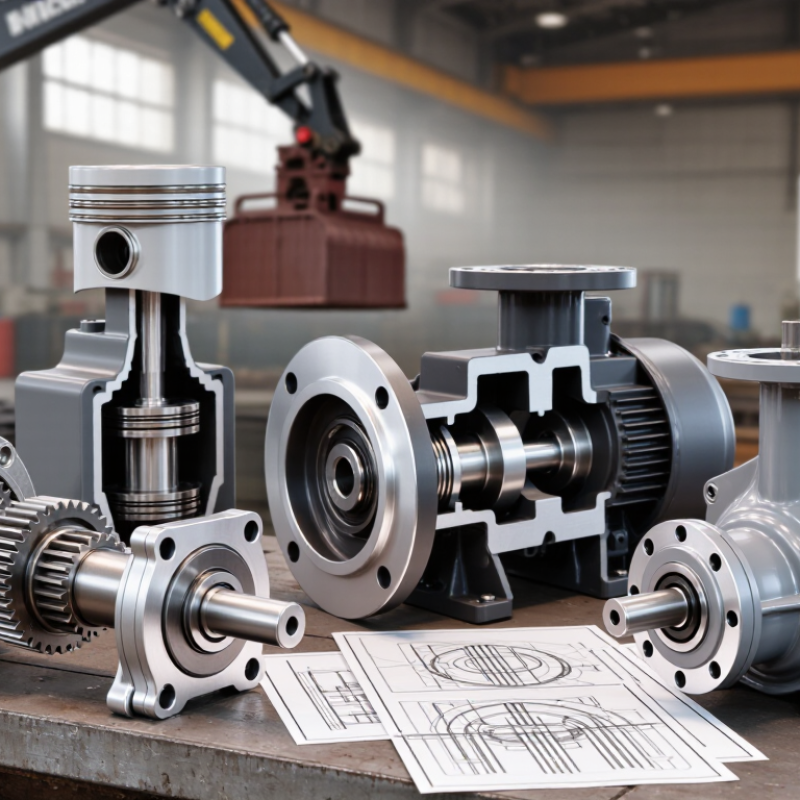
Gear Pumps: A Simple Design for Steady Hydraulic Flow
Gear pumps are a practical choice when a hydraulic system needs steady, predictable flow. Inside the housing, two meshing gears carry oil from the inlet toward the outlet. As the gears separate, they draw fluid in; as they mesh again, they push it onward. The design has few moving parts. It is also compact and straightforward to service. Flow generally rises with shaft speed, while system pressure depends on the load and circuit resistance. Output is not perfectly smooth, though. Small pressure pulses can occur as the teeth engage, and noise may increase at high speeds. Simple does not mean effortless.
Tips: Match pump displacement and operating speed to the machine’s flow needs. Check fluid cleanliness, viscosity, and inlet conditions against the pump’s specifications. A restricted inlet can cause cavitation, which may sound like gravel rattling inside the housing. That detail is easy to miss.
For steady service, inspect for leaks, unusual heat, and changes in sound. Use the specified fluid and filtration level, since contamination can wear gear surfaces and reduce efficiency. Gear pumps often work well in mobile equipment and basic industrial circuits, but they are not ideal for every duty. High-pressure demands, tight noise limits, or very precise flow control may call for another pump type. Selection is rarely as simple as comparing flow ratings alone.
FAQS
Vanes slide in rotor slots as the rotor turns inside a cam ring. Changing chamber sizes draw fluid in and push it toward the outlet.
No. Some models vary displacement to match machine demand, while others provide fixed flow. Check the control method and operating range.
Clean fluid, suitable viscosity, and proper inlet conditions help the vanes stay against the cam ring. Small details matter.
Not always. Listen for changes, check fluid condition, and compare operating pressure with the equipment manual. Wear can make a well-matched pump noisy.
Rotating screws carry fluid through spaces between the screws and housing. The result is a nearly continuous flow.
Its flow usually has less pulsation than many other pump designs. This can help reduce vibration, noise, and uneven actuator movement.
Viscosity, speed, inlet pressure, and clearances all matter. Cold, thick fluid may fill pumping spaces slowly; wear can increase internal leakage.
Inspect fluid condition and pump clearances before increasing speed. Also check inlet lines, filtration, temperature, and operating data. A small noise change can be a warning.