Who Are the Best Industrial Pump Manufacturers in China?
Choosing among China’s industrial pump manufacturers takes more than comparing prices or reading a product catalog. The right supplier must understand the fluid, operating pressure, temperature, flow rate, and installation conditions. A pump handling clean water may not suit abrasive slurry or corrosive chemicals. Small details matter: impeller materials, seal design, motor efficiency, and access to replacement parts can shape years of operating costs.
Pump engineering author Igor J. Karassik’s work points to a useful selection principle: match the pump to the system, not just the nameplate. This is a paraphrase, not a verbatim quotation. It highlights why buyers should examine technical documentation, test procedures, and service capabilities alongside product range. Ask how manufacturers verify performance, manage quality checks, and respond when a pump needs repair. Clear answers are a good sign. Vague promises are not.
China’s pump sector includes suppliers with different specialties, production scales, and export experience. Some focus on standard centrifugal models; others build equipment for demanding process applications. There is no single best choice for every project. A polished website does not prove reliable performance, and a lower quote may leave important costs out. This guide compares manufacturers through practical criteria, including engineering capability, certifications, product coverage, customization, and after-sales support. Use it as a starting point, then verify claims against your operating requirements. The comparison can help narrow the field, though no ranking replaces a careful technical review.
How China’s Industrial Pump Manufacturing Industry Is Organized
China’s industrial pump industry is not a single chain of large factories. It is a layered network of component suppliers, pump makers, engineering firms, and service teams. Some suppliers produce castings, shafts, seals, or motors. Others assemble complete units for water treatment, mining, chemicals, and power facilities.
Manufacturers often focus on particular pump types or operating conditions. A factory may build standard centrifugal pumps in volume, while another handles custom units for abrasive slurry or high-pressure duties. Some firms design and test products in-house; others depend more heavily on outside component partners. The picture is not perfectly tidy. Capabilities can vary between product lines at the same facility.
Testing matters. Buyers should ask how manufacturers verify flow, pressure, vibration, and material compatibility. A clear test report and traceable specifications are more useful than broad claims. Look closely. Also check whether the supplier can provide spare parts and technical support after delivery. Export-oriented companies may coordinate engineering, documentation, and logistics, while smaller producers may offer closer production access but narrower service coverage. A factory visit can reveal practical details: machining capacity, assembly cleanliness, and how test results are recorded. Still, one visit cannot prove consistent quality across every order. Manufacturers differ, and procurement teams need to compare evidence against the actual operating conditions.
How China’s Industrial Pump Manufacturing Industry Is Organized
Representative functions across the industrial pump value chain
The bars count the representative functions listed for each stage, not companies, market shares, or production volumes. Upstream suppliers provide materials, motors, seals, and bearings; manufacturers handle casting and forging, machining, assembly, and testing; downstream channels include engineering and procurement, distribution, and service.
Key Criteria for Evaluating Industrial Pump Manufacturers
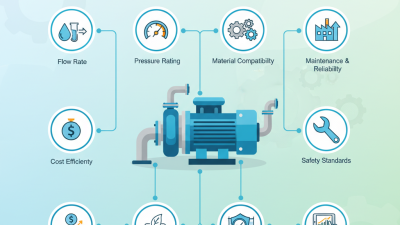
When evaluating industrial pump manufacturers in China, match the manufacturer’s technical capability to your operating conditions. Share the required flow rate, total head, fluid temperature, solids content, and duty cycle. A pump suited to clean water may struggle with abrasive slurry. Check whether material options, seal arrangements, and motor specifications fit the application. Ask for performance curves and test records for the proposed model, not just general catalog data. Look closely at efficiency near your normal operating point.
Tips: Request a factory acceptance test where practical. Confirm the test method, allowable tolerances, and report format in writing. Ask who handles commissioning, spare parts, and warranty claims. Measure twice. Keep the answers on record.
Review production controls as well as product claims. Ask how the manufacturer traces castings, impellers, and seals to inspection records. Clarify lead times, replacement-part availability, and communication arrangements before placing an order. Speak with users operating similar pumps, if possible. Their feedback may reveal vibration, noise, or maintenance issues that a brochure cannot show. Price still matters, but the lowest quotation may exclude testing or critical accessories. Some details are easy to miss, and even careful reviews cannot remove every risk. Compare the full scope, then document any unresolved questions before approval.
Leading Industrial Pump Manufacturers in China
Leading industrial pump manufacturers in China compete through engineering depth, production consistency, and support after delivery. Their products serve water treatment, chemicals, power generation, and general process industries. Pump choice affects more than flow rate. It also shapes energy use, maintenance intervals, and plant reliability. The U.S. Department of Energy’s Improving Pumping System Performance: A Sourcebook for Industry reports that pumping systems account for nearly 20% of global electricity consumption. That figure makes efficiency testing a practical purchasing concern, not a brochure detail.
A credible supplier should provide performance curves, material specifications, and clear operating limits. Ask how its team verifies flow, head, vibration, and efficiency under test conditions. Check whether the proposed pump suits the liquid’s temperature, viscosity, and solids content. A small mismatch can mean noisy operation or frequent seal changes. Details matter. Standards such as ISO 5199 and API 610 can help buyers compare technical requirements, where applicable. Still, certifications alone do not prove a pump will perform well in a specific plant. Published catalog data rarely captures every installation condition; site checks and operating feedback remain important. The comparison can feel less tidy than expected.
Pump Types, Technologies, and Industries Served
Industrial pump manufacturers in China serve a wide range of applications, from municipal water systems to mining and process plants. Their product lines commonly include centrifugal pumps for steady, high-volume flow and positive-displacement pumps for thicker fluids or controlled dosing. Submersible models handle drainage and wastewater, while multistage designs support higher-pressure duties. Each type solves a different problem.
Technology choices matter as much as pump type. Variable-frequency drives can adjust speed to changing demand, helping reduce unnecessary energy use. Mechanical seals, bearing arrangements, and wetted materials should match the fluid’s temperature, solids content, and chemical properties. In a food-processing line, cleanability may be critical; in a mine, abrasion resistance can matter more. Small details count.
Manufacturers may also offer performance testing, condition monitoring, and custom configurations. Ask for a pump curve based on the actual operating point, not just the maximum flow listed in a catalog. Check efficiency, noise, maintenance access, and spare-parts availability. A pump can look right on paper and still perform poorly after installation. That happens. Site conditions are often less tidy than the original specification.
How to Compare and Select a Chinese Pump Manufacturer
Comparing Chinese industrial pump manufacturers starts with the duty point, not the product catalogue.
Define the required flow, total head, fluid temperature, viscosity, solids, and operating hours. Small differences matter. A pump sized for clean water may struggle with abrasive slurry or frequent starts. Ask each supplier to quote against the same conditions, including efficiency and motor power, so proposals remain comparable.
Then examine engineering and production evidence.
Request performance curves, material specifications, inspection records, and a test report for a similar pump. Confirm how impellers, seals, and casings are checked, and whether pressure and vibration tests are documented. A factory visit can clarify assembly controls, but a polished tour is not proof by itself. Speak with users in comparable industries; ask about delivery changes, spare-part availability, and support after commissioning.
Commercial terms deserve equal scrutiny.
Compare warranty coverage, lead time, export packaging, documentation, and wear-part costs—not just purchase price. Check whether material or connection changes are recorded and approved by technical staff. Keep a short scorecard. It will not remove uncertainty, and it may reward paperwork over workmanship if used carelessly. That is worth noticing. Verify critical claims with test data and clear acceptance criteria before placing an order.