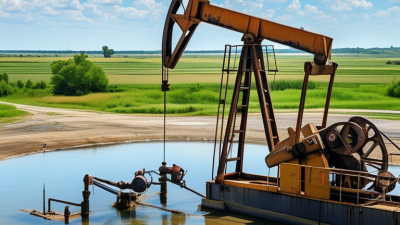
A water well pump is easy to overlook until the kitchen tap sputters, the pressure tank clicks repeatedly, or the garden hose barely reaches the far beds. In 2026, the best choice still depends on the well, not a headline ranking. Well depth, flow rate, power supply, water quality, and household demand all matter. No single pump wins.
The U.S. Geological Survey’s national water-use reporting documents groundwater as a major source for public supply, irrigation, and domestic use. The CDC estimates that more than 43 million people in the United States rely on private wells. Those figures make dependable pumping more than a comfort issue. They also show why selection advice should distinguish household needs from agricultural or commercial systems.
A useful perspective comes from Dr. Thomas Harter, a UC Davis groundwater specialist: “A pump should be matched to the well’s actual conditions.” This is a concise paraphrase of his groundwater guidance, not a verbatim quotation about pump brands. For a real comparison, measure the well’s static water level and recovery rate, then check the pump’s flow and head ratings. A powerful motor alone proves little. That detail is easy to miss.
This guide compares submersible and jet pumps, explains key specifications, and weighs durability, efficiency, maintenance, and cost. It also flags a practical limitation: published ratings rarely predict performance in every well. The best water well pump is the one sized correctly for your site, installed competently, and supported with parts you can obtain.
What Is the Best Water Well Pump in 2026?
How Water Well Pumps Work and What “Best” Means in 2026
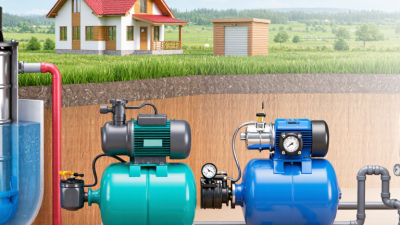
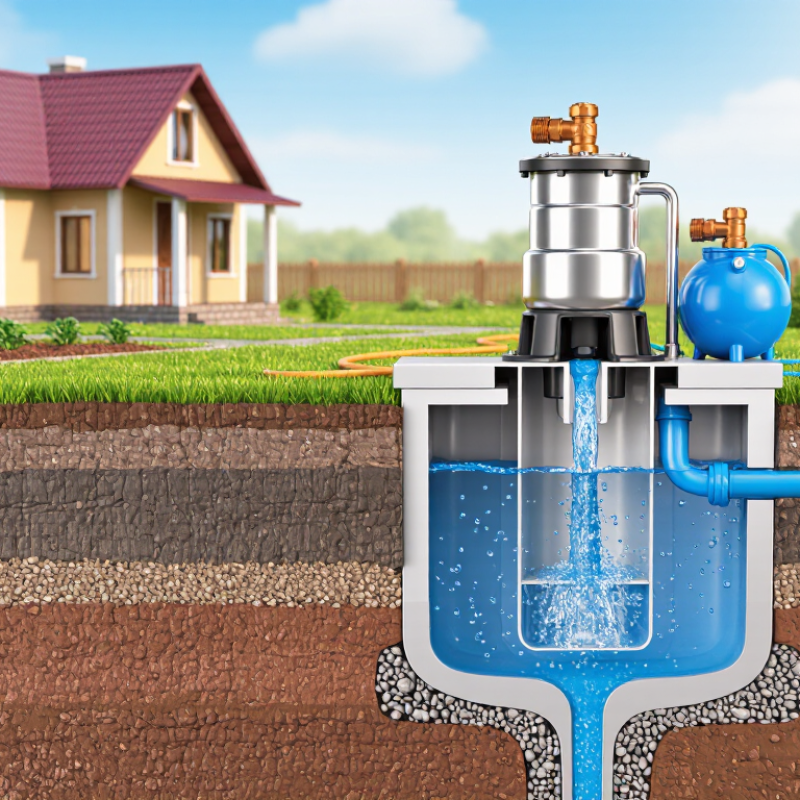
A water well pump lifts groundwater and sends it through household pipes. Most homes use either a submersible pump or a jet pump. A submersible pump sits underwater and pushes water upward. A jet pump stays above ground and draws water through a pipe. The suitable type depends on well depth, water level, and required flow. Bigger is not automatically better. An oversized pump can cycle too often, wearing parts sooner. The pressure tank and pipe layout matter, too.
Tips: Check the well’s measured depth and water level, not just its age. Ask for the pump’s flow rate and pressure range. Keep the well’s inspection and service records nearby. Small details help.
In 2026, “best” means a pump matched to the well and the home’s daily demand, with dependable parts and practical service access. A household with one bathroom may need less flow than a home using several taps, irrigation, or livestock waterers at once. Ask a qualified well professional to assess recovery rate and electrical supply before choosing. A pump that looks right on paper can disappoint if the well refills slowly. And honestly, no single model suits every property. The right choice may take a site visit, which is less convenient than ordering by a chart, but usually more reliable.
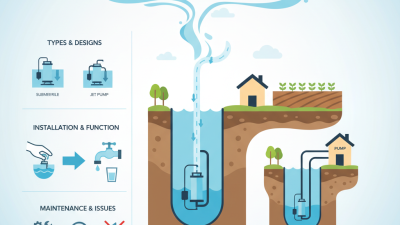
How well pumps work—and why “best” depends on your well
Submersible pumps sit below the water and push water upward; jet pumps use suction and are limited by the water level’s depth. The ranges shown are representative, not guaranteed limits—actual capability depends on the pump model and installation. The best choice also depends on required flow, total dynamic head, well yield, power supply, and water quality.
The best pump depends on well depth, water yield, and household demand. For many deep wells, a submersible pump is a practical choice. It sits below the waterline and pushes water upward, often providing steady pressure with less surface noise. A qualified installer can match its capacity to the well’s measured recovery rate. A pump that moves water faster than the well refills may cause problems.
Jet pumps suit shallow wells where the water level is relatively close to the surface. Shallow-well models draw water from above ground; deep-well jet systems use an ejector to lift water from greater depths. They are accessible for maintenance, but can be noisier and may need careful priming. For remote sites with modest needs, a manual pump can provide a useful backup. It is slower, though.
Tips: Measure the static water level and note the well’s tested flow before choosing. Check the pump’s depth rating, power supply, and pressure-tank requirements. Ask a licensed well professional to review the setup. I would not choose by horsepower alone; that shortcut sounds simple, but it can overlook the well’s actual recovery.
The best water well pump in 2026 is the one matched to your well, not the one with the largest motor. Start with the pump’s depth rating, the distance from the pump to your home, and your well’s measured yield. A static water level alone is not enough; ask for the pumping water level, too, because it drops as water is drawn. USGS Circular 1441 reports that U.S. groundwater withdrawals averaged 82.3 billion gallons per day in 2015. That national figure shows groundwater’s importance, but it cannot tell you how much your individual well can supply. A pump installer should check the well log and perform a flow test.
Match capacity to real household demand and the well’s recovery rate. Oversizing can make a pump cycle frequently or draw water faster than the well replenishes. Small details matter. Consider total lift, desired pressure, pipe size, sediment, and available electrical service. For a deep well, a submersible pump is often appropriate; shallower wells may suit other designs. The U.S. Department of Energy’s Improving Pumping System Performance sourcebook notes that pumping systems can use 25–50% of energy in some industrial facilities. That is not a household estimate, but it supports comparing efficiency at your actual flow and lift. Ask for the pump curve and a written sizing rationale. A neat calculation can still miss seasonal water-level changes.
The best water well pump in 2026 depends on well depth, measured yield, and household demand. Submersible pumps are commonly used in deeper wells, while jet pumps can serve some shallower setups. Compare each model’s performance curve, motor efficiency, dry-run protection, materials, and parts availability. Horsepower alone tells little. A pump that is too large may cycle frequently and waste energy.
The U.S. Department of Energy’s Improving Pumping System Performance: A Sourcebook for Industry reports potential energy savings of 20–50% from industrial pump-system improvements. That range is not a household well-pump guarantee, but it shows why correct sizing matters. The U.S. Geological Survey estimated 82.3 billion gallons per day of groundwater withdrawals nationwide in 2015, across many uses. These figures provide context, not a direct pump ranking. A tidy specification sheet can still mislead; real well conditions vary.
Tips: Ask for a recent pump test and record static water level, recovery rate, and required flow. Check pressure at the farthest tap, too. If the numbers are missing, pause before buying. That small step is easy to overlook.
A dependable well pump starts with measurements, not guesswork. Record the well’s depth, water level while pumping, and required flow rate. A shallow-well jet pump may suit a modest lift, while deeper wells typically need a submersible pump. Confirm the pump’s capacity against the well’s recovery rate; a powerful unit can still run dry if the well cannot replenish water quickly. Small details matter. Check pipe diameter, wiring, pressure-tank size, and local installation requirements before work begins.
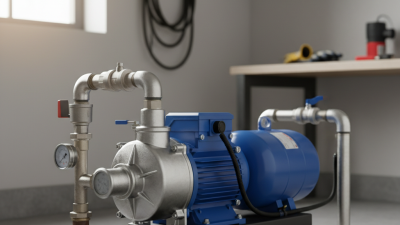
Correct installation protects efficiency. Keep the pump level and secure, use properly sized piping, and seal electrical connections against moisture. For a submersible unit, set it above the well bottom to reduce sediment intake, while keeping it sufficiently below the pumping water level. A pressure gauge and accessible shutoff valve make later checks easier. One detail is easy to overlook: long or narrow pipes can add friction and reduce delivered flow, even when the pump seems adequately sized.
Maintenance is mostly observation. Note changes in pressure, cycling frequency, unusual noise, or cloudy water. A pump that switches on every few seconds may point to a waterlogged pressure tank, a leak, or incorrect settings. Test water quality on a regular schedule, especially after repairs or flooding. Keep records, though they may be imperfect; even dated notes about a falling pressure reading can reveal a trend. Avoid adjusting electrical components unless qualified, and have persistent faults inspected before they damage the pump.
| Pump type | Best suited to | Typical installation range | Efficiency considerations | Installation considerations | Maintenance and limitations | Overall fit |
|---|---|---|---|---|---|---|
| Submersible pump | Most residential drilled wells, especially where the water level is well below ground | Available for a wide range of well depths and flow requirements; select using the well’s static and pumping water levels, desired flow, and total dynamic head | Often an efficient choice for deep wells because the pump pushes water rather than lifting it by suction. Actual system efficiency depends on pump sizing, motor, pipe losses, and operating point. | Installed below the water level in the well. Requires suitable drop pipe, electrical cable, check valve arrangement, and sanitary well cap or seal. | Usually has few routine service needs, but removing it for repair can be labor-intensive. Protect against dry running, sediment, voltage problems, and frequent cycling. | Best all-around option for many deep residential wells when correctly sized |
| Shallow-well jet pump | Shallow wells where the pumping water level is close to the surface | Typically used where suction lift is about 25 ft or less; the practical limit varies with altitude, plumbing losses, and the pump model | Generally less efficient than a comparable submersible system because jet action recirculates some water. Correct pipe sizing and avoiding excessive suction lift help performance. | Mounted above ground in a dry, protected location. The suction line must be airtight and properly primed; a foot valve or check valve is commonly used. | Accessible for service, but may need reprime after loss of prime. Check for air leaks, clogged intake screens, and pressure-control problems. | A practical choice for accessible, genuinely shallow wells |
| Deep-well jet pump | Wells too deep for a shallow-well jet pump but where an above-ground pump is preferred | Uses a jet assembly below ground; achievable lift varies by design and commonly reaches roughly 100 ft of pumping water level in suitable installations | Typically less energy-efficient than a properly selected submersible pump because part of the flow is recirculated through the jet system. | The pump stays above ground, while a two-pipe arrangement commonly connects it to the submerged jet assembly. Requires careful priming and airtight plumbing. | Above-ground components are accessible, but troubleshooting the jet assembly and multiple pipes can be more involved. Performance falls if the water level or drawdown exceeds the design. | Useful when above-ground service access is a priority and the well suits the system |
| Solar-powered submersible pump | Remote sites without dependable grid power, livestock watering, or systems with water storage | Depends on well depth, sunlight, solar array, controller, and storage capacity; select from the pump curve and expected daily water demand | Can reduce grid electricity use, but output changes with sunlight. A storage tank can help meet demand when solar production is low. | Requires compatible solar modules, wiring, controller, overcurrent protection, and often a water-level or dry-run control. Battery storage is optional in some designs. | Keep panels clean and unobstructed; inspect wiring, connections, controls, and pump performance. Cloudy weather and seasonal sun affect water production. | A strong option where power access is limited and demand can be planned around available sunlight |
| Manual hand pump | Emergency backup, small water needs, or locations without electricity | Practical lift depends on pump design and the water level; standard suction-style hand pumps are limited by atmospheric pressure, while deep-well designs use different mechanisms | Uses human effort rather than electricity. The amount of water delivered per effort depends on lift, pump design, and condition. | Must be matched to the well casing and depth. Some deep-well models require a dedicated installation and compatible drop pipe. | Inspect seals, rods, handles, and moving parts; protect the water outlet from contamination and freezing where relevant. Flow is slower than powered systems. | Best as a low-demand or backup solution rather than the sole choice for a typical household |
Selection note: There is no single best pump for every well. Before choosing, confirm the well’s yield, static and pumping water levels, total dynamic head, required household flow, power supply, water quality, and pump-curve operating point. Have electrical work, pressure-system setup, and well-seal installation performed to applicable local codes by qualified professionals.