How to Choose a Water Well Pressure Pump?

Choosing a water well pressure pump is not just a matter of buying the strongest model on the shelf. The right choice depends on your well’s recovery rate, the depth to water, household demand, and the pressure your fixtures need. A shower running upstairs, a washing machine filling, and a garden hose left open can place very different demands on one system. Small details matter.

Groundwater author John A. Driscoll’s technical work offers a useful principle: “Match the pump to the well’s yield and the system’s actual demand, not horsepower alone.” This is an editorial summary, not a verbatim quotation. It captures a common sizing mistake: a powerful pump cannot make a low-yield well produce more water safely. It may instead cause rapid cycling or leave the well short of water. That part is easy to overlook.

This guide explains how to compare pump types, estimate flow and pressure needs, and check key details such as pumping water level, pipe size, pressure tank, and electrical supply. You will also learn when a submersible pump may suit a deep well, and when a jet pump may be appropriate for a shallower setup. Measurements from a recent well test are more useful than guesswork. If those records are missing, pause before ordering. A local well professional can assess the system and confirm the pump’s fit. Even careful estimates have limits; household use changes, and wells can vary seasonally.
How to Choose a Water Well Pressure Pump?

Determine Your Household Water Demand and Peak Flow Rate

How to Choose a Water Well Pressure Pump? Start with the water your household actually uses, not the pump’s advertised maximum. The US Environmental Protection Agency estimates that an average family uses about 300 gallons of water per day at home. That daily total helps with context, but it does not tell you the peak flow your pump must deliver. A shower running while a washing machine fills can demand much more water at once than a quiet morning.

List fixtures that may run together, then measure their flow with a container and stopwatch. A one-gallon jug filled in 30 seconds indicates 2 gallons per minute. Add the likely simultaneous flows to estimate peak demand. The Water Research Foundation’s 2016 Residential End Uses of Water Study II reported average indoor use of 58.6 gallons per person per day across participating single-family homes; household habits still vary. Real measurements matter. Don’t overlook outdoor taps or irrigation, even if they run only seasonally. A small miscount can leave showers sputtering. It happens.

Compare your estimated peak flow with the well’s sustainable yield, not just its short-term output. A licensed well professional can conduct a yield test and check recovery over time. The U.S. Geological Survey’s water-use data can provide regional context, but it cannot replace measurements at your own well. Also note pressure needs: a second-floor shower may feel weak even when total flow seems adequate. I’d recheck the numbers after adding a fixture; household routines are not perfectly predictable.

Measure Well Depth, Water Level, and Required Pressure

Measure the well’s total depth, then measure the water level with the pump off and while it is running. These are different readings. Total depth describes the well; the pumping water level shows how far the pump must lift water during use. A 180-foot well might have water standing just 25 feet below ground. The difference matters. Record how quickly the level recovers, too, since one quick reading can be misleading. I would recheck it; this measurement is easy to misread.

Next, estimate the pressure needed at the home, especially at the highest or farthest fixture. About 2.31 feet of water height equals 1 psi, so 50 psi represents roughly 115 feet of pressure head. Add that to the lift from the pumping water level, plus allowance for pipe friction, fittings, and elevation changes. This gives a useful estimate of the pump’s total head requirement. For example, a 40-foot lift and 50 psi already require about 155 feet of head before pipe losses. Small details count. Compare the estimate with a pump performance curve, not just its maximum pressure rating. If readings vary or the well’s yield is uncertain, have a qualified well professional verify the measurements before choosing equipment.

How to Choose a Water Well Pressure Pump

Measure the pumping water level and the pressure you need at the house. The chart shows how these contribute to estimated total dynamic head in three example setups.

How to read it: Total dynamic head is estimated here by adding pumping lift, pressure head, and an illustrative friction allowance. A target pressure of 40 psi equals about 92 feet of water head (1 psi ≈ 2.31 feet). Well depth is not the same as pumping lift: use the water level while the well is pumping, and account for the pump’s position and system layout when selecting equipment. Actual friction losses depend on flow rate, pipe diameter, and fittings.

Match Pump Types to Well Conditions and System Layout

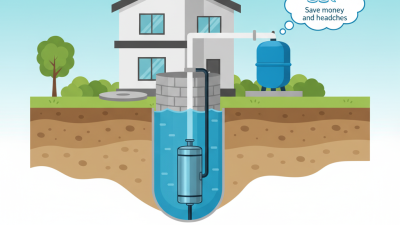
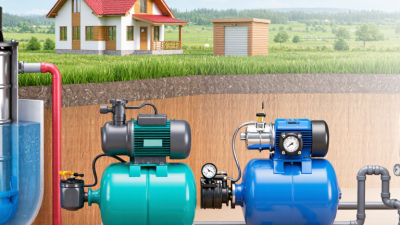
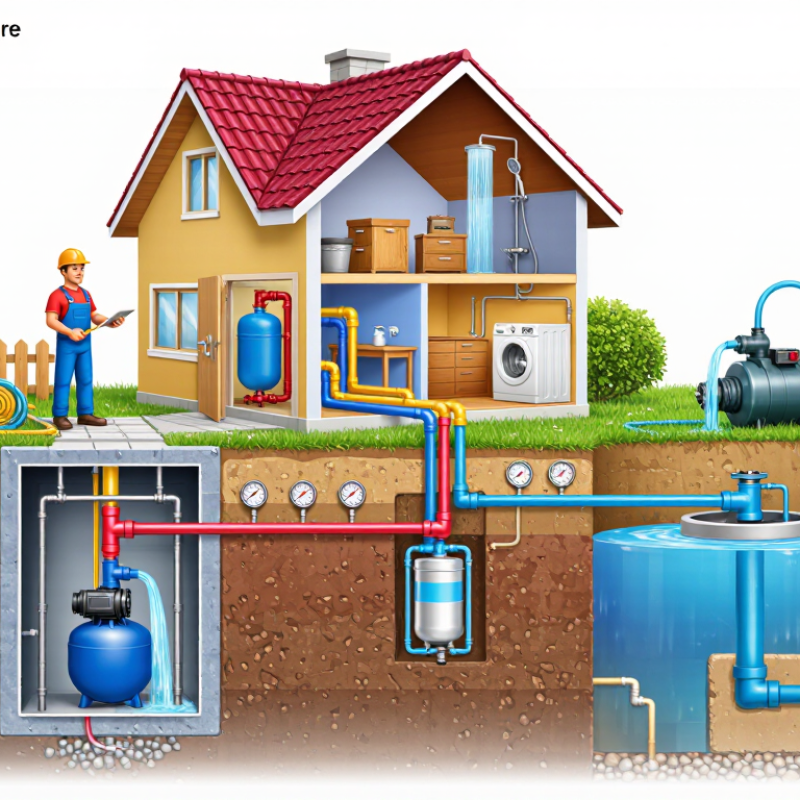
Choosing a water well pressure pump starts with the well, not the house. A submersible pump sits below water level and often suits deeper wells. A jet pump stays above ground and can work for shallow wells, though its practical lift is limited. Depth matters. Check the well’s measured water level while pumping, not just its total depth. A pump that outruns the well’s recovery may cause pressure swings or run dry.

The system layout matters just as much. Note the vertical rise from the water level to the tank, the pipe distance, and the number of bends. These add to the work the pump must do. A long run to a house on a hill may need different sizing than a nearby pressure tank. Match the pump’s flow to the well’s sustainable yield and household demand. Oversizing can increase cycling and wear; undersizing may leave showers weak. The neat calculation can still miss real-world drawdown.

Tips: Use a recent well test and measure pipe runs before choosing. Check the pump’s performance chart at your required flow and total lift. If the water level varies seasonally, leave a safety margin and ask a qualified well professional to verify the setup.

Calculate Pump Capacity, Total Head, and Pressure Tank Needs

How to Choose a Water Well Pressure Pump?

Calculate Pump Capacity, Total Head, and Pressure Tank Needs

Start with peak demand, not just daily use. The USGS estimated domestic water use at about 82 gallons per person per day in 2015, but that average cannot size a pump for a busy morning. List fixtures likely to run together, then estimate their combined flow in gallons per minute. Compare that figure with the well’s tested yield. A pump that draws water faster than the well recovers may cause low pressure or run dry. Measure it under load.

Next, calculate total dynamic head: pumping water level lift, pressure requirement, and pipe friction. Each psi needs about 2.31 feet of water head. For example, 50 psi adds roughly 116 feet; a 120-foot lift and 15 feet of estimated friction bring the total near 251 feet. Select from the pump curve at that head and your required flow—not from horsepower alone. Small pipe, elbows, and long runs can change the estimate.

Size the pressure tank by usable drawdown, not its advertised tank volume. If the pump delivers 10 gallons per minute and the design calls for a one-minute minimum run, target at least 10 gallons of drawdown. Check the tank’s drawdown chart for your pressure-switch settings. This is still an estimate: actual well levels shift seasonally, and friction is easy to undercount. I’d verify the pumping water level and measured flow before buying.

Compare Efficiency, Materials, Controls, and Maintenance Requirements

Choose a pump by matching its rated flow to the well’s recovery rate and your household’s peak demand. Check the pump curve at the pressure you actually need; flow often drops as pressure rises. An oversized pump may cycle frequently, wasting energy and wearing its motor. Small details matter. A pressure gauge and a timed bucket test can provide useful starting measurements, though they do not replace a well professional’s assessment.

Compare efficiency using the pump’s performance data, not horsepower alone. Materials should suit your water conditions. Stainless steel and corrosion-resistant components can help where water is mineral-rich, but no material is ideal for every well. If water leaves orange stains or gritty deposits, consider a water test before choosing seals and pump components. Guessing can be costly.

Controls affect comfort and service life. A pressure switch is simple to understand, while variable-speed controls can maintain steadier pressure and reduce abrupt starts. Confirm that controls match the pump and tank, and follow the manufacturer’s installation instructions. Listen at startup. Repeated clicking, pressure swings, or unusual vibration deserve attention. Keep the area dry and accessible, and have electrical or internal pump work handled by a qualified technician. Maintenance schedules vary; a neglected filter or leaking fitting can make a good pump seem unreliable.

How to Choose a Water Well Pressure Pump? - Compare Efficiency, Materials, Controls, and Maintenance Requirements

Selection Factor Shallow-Well Jet Pump Deep-Well Jet Pump Submersible Well Pump
Typical well application Shallow wells where the water level is within the pump’s practical suction-lift range. Deeper wells served by a jet assembly in the well and a pump installed above ground. Wells where the pump is installed below the water level, including many deep-well applications.
Depth considerations Practical suction lift is generally limited to about 25 ft (7.6 m) at sea level; actual performance depends on elevation, piping, and water level while pumping. Can serve greater depths than a shallow-well jet pump. The usable range depends on the pump and jet assembly, piping layout, and required flow. Selected to match the well’s pumping water level, required flow, and total dynamic head. Available designs cover a wide range of well depths.
Energy efficiency Jet action recirculates water, so efficiency is generally lower than a correctly sized submersible for comparable conditions. Jet-system recirculation typically reduces efficiency; actual energy use depends on lift, flow, and pump sizing. Often a good efficiency choice for deeper lifts because it pushes water rather than relying on suction. Efficiency still depends on operating near the pump’s intended flow and head.
Common materials Common pump housings include cast iron, stainless steel, or engineered thermoplastic; impellers may be thermoplastic, bronze, or stainless steel. Above-ground pump materials are similar to shallow-well jet pumps. The in-well jet assembly and fittings must suit the water chemistry. Common designs use stainless-steel or corrosion-resistant thermoplastic components and sealed motors. Materials vary by model and application.
Installation and priming Installed above ground and must be primed. A sound suction line and foot valve or check valve help maintain prime. Installed above ground with additional piping and a jet assembly in the well. Priming and correct pipe arrangement are important. Installed in the well and generally does not require surface priming. Installation requires suitable drop pipe, cable, and electrical protection.
Pressure controls A pressure switch and pressure tank are common. Conventional switch settings include 30/50 or 40/60 psi, if compatible with the pump and plumbing system. Typically uses a pressure switch and pressure tank; settings must be within the pump’s operating limits. Commonly controlled by a pressure switch and tank, or by a compatible variable-speed constant-pressure controller. Electrical overload and dry-run protection may be appropriate.
Maintenance access Motor, pressure switch, and pump are accessible above ground. Check prime, leaks, inlet strainer, and foot valve or check valve as needed. Above-ground components are accessible, but diagnosing or servicing the in-well jet assembly may require pulling piping from the well. The motor and pump are underwater and normally need no frequent routine service. A failed unit or well-side fault can require pulling the pump and drop pipe.
Best suited to Shallow water levels, straightforward access, and applications where above-ground serviceability is a priority. Wells too deep for a shallow-well jet pump when an above-ground pump arrangement is preferred or required. Deeper wells, limited surface space, or installations where avoiding suction-lift limitations is important.
Key checks before purchase Confirm pumping water level, required household flow, suction-line size and length, and the pump’s pressure and head ratings. Confirm pumping water level, jet-pump configuration, pipe sizes, required flow, and total head at the desired pressure. Confirm well diameter, pumping water level, well yield, required flow, total dynamic head, voltage, and motor protection requirements.

Selection note: Pumping water level is the water level while the well is operating, not just the static level at rest. Final sizing should account for the required household flow, elevation, pipe losses, and desired system pressure. Actual performance and service intervals vary with installation, water quality, and equipment design.