
7 Oil Jet Pump Buying Tips for Global Buyers?
Choosing an oil jet pump for an international project involves more than comparing catalog prices. The pump must match the fluid, pressure range, temperature, flow rate, and available installation space. A small mismatch can create unstable suction, excessive wear, or costly downtime. These risks become harder to manage when buyers work across different languages, standards, and service networks.
This guide presents seven practical buying tips for global buyers. It focuses on evidence rather than attractive claims. Check performance curves, material specifications, test records, and warranty terms before approving a quotation. Ask whether the supplier has supported similar applications, such as refinery vacuum systems, chemical processing lines, or heavy industrial equipment. Clear answers matter. So do detailed documents. A reliable supplier should explain nozzle design, operating limits, maintenance needs, and spare-part availability.
Purchase decisions should also consider delivery conditions and long-term support. Confirm packaging, export documentation, inspection procedures, and technical assistance before payment. Regional certifications may differ, so buyers should verify requirements with qualified local professionals. Do not assume one approval works everywhere. That mistake is common. A perfect checklist does not exist, because every operating site has different risks. Still, careful questions can expose weak assumptions early. The following tips help buyers compare an oil jet pump with greater confidence, reduce avoidable surprises, and build a more dependable procurement process.
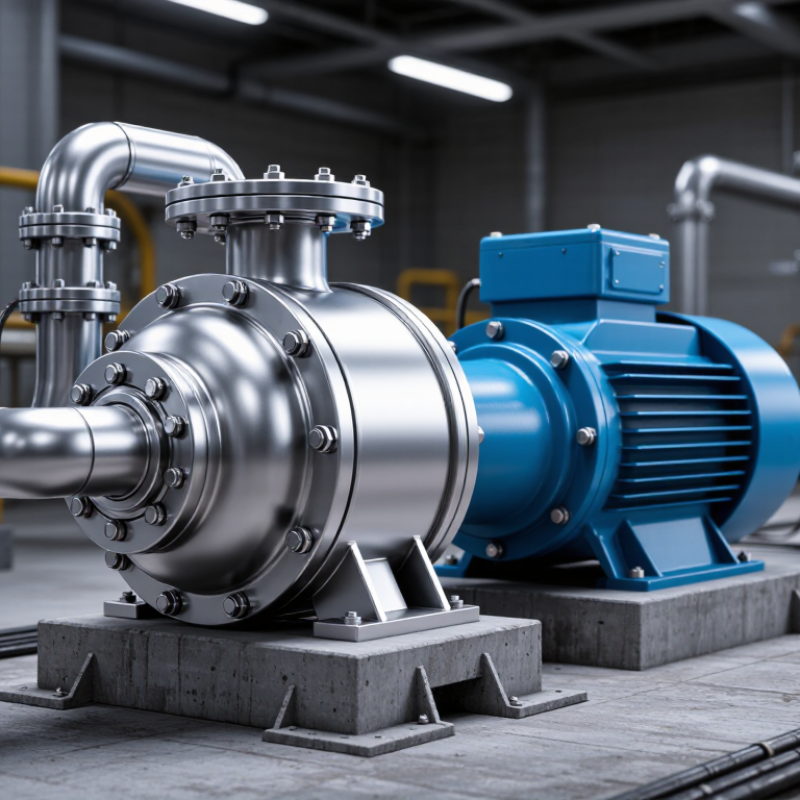
Understanding Oil Jet Pump Types and Operating Principles
An oil jet pump uses pressurized oil as its motive fluid. The oil passes through a narrow nozzle and accelerates sharply. This creates a low-pressure zone that draws in the secondary fluid. The mixed stream then enters a diffuser, where velocity decreases and pressure rises. That is the core operating principle.
Common designs include single-nozzle, multi-nozzle, and downhole hydraulic jet pumps. Single-nozzle units suit simpler duties and easier maintenance. Multi-nozzle designs can handle larger flow requirements, but alignment becomes more important. Downhole versions use power fluid to lift production from deep wells. Their performance depends on depth, fluid density, gas content, and backpressure.
Check viscosity at actual operating temperature, not at room temperature. Cold oil may resist flow and reduce entrainment. Ask for nozzle dimensions, pressure-flow curves, efficiency data, and material certificates. Confirm seal compatibility with the oil, additives, and expected temperature range. I have seen specifications that looked impressive but ignored suction pressure. That omission can cause unstable operation. It is also wise to review cavitation risk, corrosion exposure, maintenance access, and local pressure-equipment requirements. Do not assume a larger pump is better. Oversized equipment may waste motive oil and create unnecessary operating costs. Request witnessed testing when the application is critical. Yet even test results need context, because laboratory fluids rarely behave exactly like field fluids.
7 Oil Jet Pump Buying Tips for Global Buyers? – Understanding Oil Jet Pump Types and Operating Principles
| No. | Buying Dimension | Oil Jet Pump Type / Principle | Typical Technical Data | Selection Guidance for Global Buyers |
|---|---|---|---|---|
| 1 | Define the required lifting duty Confirm production rate, pump setting depth, fluid level, tubing size, and well pressure before comparing models. |
A jet pump uses a high-pressure power fluid through a nozzle. The nozzle converts pressure into velocity, creating a low-pressure zone that entrains and lifts the produced fluid through a mixing throat and diffuser. | Common applications cover low-to-moderate production rates, often from several hundred to several thousand barrels of total liquid per day, depending on well depth, fluid properties, and surface pressure. | Request a complete operating point rather than a maximum rate. The supplier should provide expected intake pressure, injection pressure, power-fluid rate, produced-fluid rate, and calculated efficiency. |
| 2 | Choose the correct jet pump configuration Compare fixed, retrievable, insert, casing-flow, and tubing-flow arrangements. |
Fixed installation: pump components remain downhole and may require a workover for replacement. Retrievable insert: the pump assembly can typically be recovered through the tubing using wireline or a pulling tool, subject to completion design. Reverse-flow or casing-flow systems: the power fluid and produced fluid travel through different flow paths selected by the completion layout. |
Retrievable designs generally reduce intervention time, while fixed designs may provide a simpler completion or greater mechanical robustness in selected wells. | Select the configuration according to workover cost, well deviation, tubing and casing dimensions, available pulling equipment, and the required frequency of pump changes. |
| 3 | Match nozzle and throat geometry Do not select a pump only by housing size. |
The nozzle controls power-fluid velocity and the throat controls mixing and pressure recovery. Different nozzle-to-throat combinations change fluid throughput, drawdown, discharge pressure, and efficiency. | Many downhole jet pumps use replaceable nozzle and throat components. Smaller nozzles generally require less power-fluid volume but may provide lower total capacity; larger combinations usually require more power-fluid capacity. | Ask for performance curves or a sizing calculation at the actual well conditions. Confirm that the selected combination can operate without excessive cavitation or insufficient intake pressure. |
| 4 | Check fluid compatibility Evaluate oil viscosity, water cut, gas content, solids, scale, and corrosive components. |
Jet pumps have no downhole moving parts in the pumping section, which helps them tolerate abrasive or corrosive service better than many mechanically driven pumps. However, the nozzle and throat remain sensitive to erosion, plugging, and changes in fluid properties. | Performance is affected by viscosity, gas-liquid ratio, temperature, sand concentration, produced-water chemistry, and dissolved solids. Higher viscosity and free gas generally reduce hydraulic efficiency. | Provide representative fluid samples or laboratory data. Specify erosion-resistant materials, filtration requirements, chemical treatment, and allowable solids concentration where applicable. |
| 5 | Verify surface power-fluid requirements Confirm the pump, motor, fluid system, filtration, and control package as one system. |
A surface pump pressurizes clean power fluid and sends it downhole. The downhole nozzle converts this pressure into a high-velocity jet, and the mixed stream returns to the surface through the designated production flow path. | Required injection pressure and flow are well-specific. Surface systems commonly include a positive-displacement pump, suction tank, filters, pressure gauges, relief protection, valves, and flow-control equipment. | Check available electrical or engine power, fluid storage, filtration capacity, pressure rating, spare-parts availability, and local regulations for pressure equipment. |
| 6 | Compare efficiency and operating cost Evaluate energy consumption, maintenance, and production stability instead of purchase price alone. |
Jet-pump efficiency depends on nozzle pressure, power-fluid rate, mixing ratio, fluid properties, pump depth, and backpressure. Hydraulic losses occur in the nozzle, mixing throat, diffuser, tubing, and surface flowline. | The system can be adjusted by changing injection pressure, power-fluid rate, or nozzle/throat dimensions. There is no single universal efficiency value because well conditions vary substantially. | Compare cost per produced barrel, power consumption, intervention frequency, fluid-treatment cost, and expected run life. Request sensitivity data for changes in water cut, gas rate, and wellhead pressure. |
| 7 | Confirm standards, documentation, and after-sales support Make sure the equipment can be installed and serviced in the destination country. |
A complete package should include the downhole pump, nozzle and throat specification, completion interface, surface power-fluid equipment, installation procedure, operating limits, and maintenance instructions. | Important documentation includes dimensional drawings, material certificates, pressure-test records, performance data, recommended spare parts, inspection procedures, and operating manuals. | Check applicable petroleum, pressure-equipment, electrical, lifting, and import requirements. Confirm technical support time zones, training, spare-parts lead times, warranty terms, and local service capability. |
Related Posts
-

The Future of Oil Well Pumps Innovations and Trends Transforming the Oil Industry
-

Top China Best Oil Well Pump Options for Global Buyers?
-
2026 Best Hydraulic Pump Options for Global Buyers?
-
How to Choose a Hydraulic Oil Pump?
-

How to Select the Right Fracking Pump for Your Oil and Gas Operations
-
Understanding the Role of Fracking Pumps in Modern Oil Extraction Techniques