How to Choose a Hydraulic Oil Pump?
Choosing the right hydraulic oil pump begins with understanding the machine, not browsing the highest-rated product. A hydraulic oil pump must match the system’s required flow, pressure, operating speed, and duty cycle. A compact excavator, injection machine, and agricultural tractor place very different demands on pump performance. Start with the manufacturer’s specifications and measure actual operating conditions whenever possible. Guesswork can become expensive.
Displacement is a key consideration because it influences flow output at a given speed. Pressure ratings also matter, but the continuous rating should receive more attention than the short-term maximum. Check oil viscosity, fluid temperature, shaft speed, mounting dimensions, and inlet requirements. A pump that fits physically may still suffer from cavitation, overheating, or premature wear. Listen for unusual noise. Inspect the suction line carefully. Small restrictions can create serious problems.
Experienced technicians also compare efficiency, service access, replacement parts, and supplier support. A reputable manufacturer should provide clear performance curves, material details, testing information, and installation guidance. Certifications and documented quality controls add confidence, but they do not replace application-specific verification. No checklist is perfect. Some selection decisions remain uncertain until the pump operates under real load. For that reason, record pressure, temperature, and noise during commissioning, then review the results honestly. The biggest pump is rarely the best choice. Reliable selection balances performance, energy use, maintenance needs, and long-term operating cost.
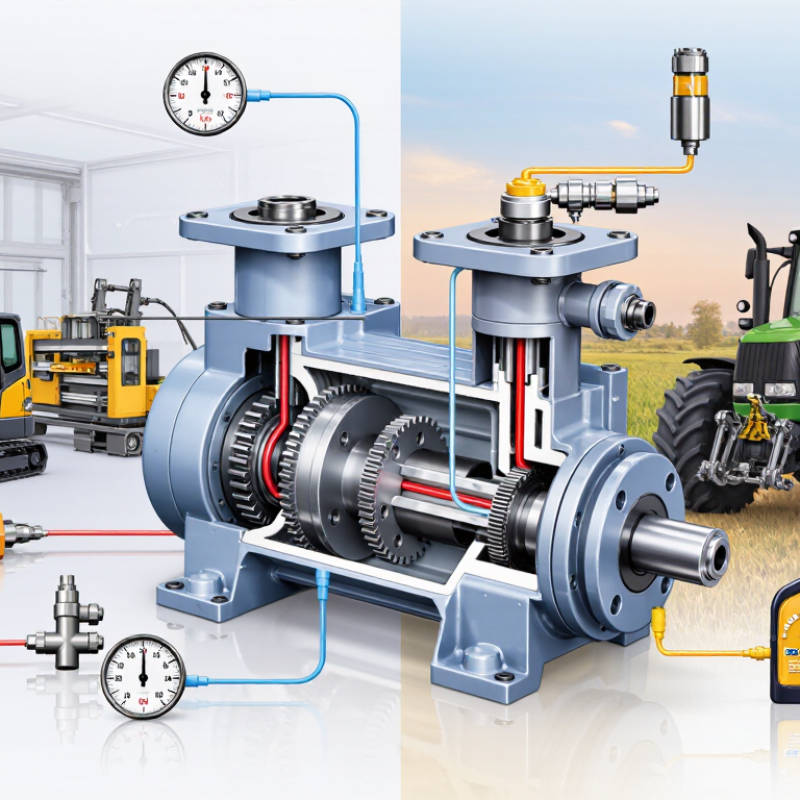
Define the Hydraulic System’s Pressure, Flow, and Duty Requirements
How to Choose a Hydraulic Oil Pump?
Define the hydraulic system’s pressure, flow, and duty requirements before comparing pump types. Start with the actuator’s working pressure, not the pump’s maximum rating. A pump must handle the required pressure continuously, with a sensible safety margin. Excessive margin can increase cost, heat, and energy loss.
Calculate flow from cylinder speed and effective piston area. For a motor, use displacement, speed, and expected efficiency. Record the highest flow demand during simultaneous operations. A machine that lifts slowly may need less flow than its test cycle suggests. Measure the real cycle when possible. Estimates can mislead.
Duty requirements also shape the choice. Note operating hours, startup frequency, load changes, and ambient temperature. Continuous service needs stable efficiency and strong heat control. Intermittent equipment may tolerate different compromises. Check oil viscosity at cold startup and normal operating temperature. I have seen pumps selected correctly on paper but struggle during winter starts. That detail is easy to miss. Pressure spikes also deserve attention. Use a pressure gauge near the pump outlet, and compare readings under actual load. Recheck the calculation after installation. Field conditions rarely match the spreadsheet perfectly.
Compare Pump Types by Efficiency, Control, and Operating Conditions
Choosing a hydraulic oil pump starts with the machine’s real duty, not a catalog pressure rating. Gear pumps are simple, compact, and usually economical. Their fixed displacement delivers dependable flow, but throttling excess flow can waste energy as heat. They suit loaders, presses, and other systems with steady demand. Keep the oil clean and correctly filtered. Small particles can quickly damage internal clearances.
Vane pumps usually run more quietly than gear pumps and offer improved volumetric efficiency. They fit moderate-pressure systems requiring smoother operation. However, their performance can decline when oil viscosity becomes too high or contamination increases. Piston pumps provide the highest efficiency at demanding pressures. Variable-displacement models can reduce flow when actuators slow down, cutting unnecessary power consumption. Their control systems are more sensitive, and their purchase and maintenance costs are higher.
Operating conditions should guide the final choice. Check cold-start temperature, oil viscosity, duty cycle, pressure peaks, and available drive power. A pump running near its relief-valve setting may appear capable, yet it can create damaging heat. Field commissioning often reveals this mistake. I would also measure actual flow under load, rather than trusting calculations alone. Pressure-compensated control improves response, while load-sensing control can save energy across changing demands. There is no perfect choice. An oversized pump may offer capacity but waste power, while an undersized pump may overheat before completing the work.
How to Choose a Hydraulic Oil Pump?
Compare pump types by efficiency, control, and operating conditions.
Gear Pumps
Simple and cost-effective for fixed-flow systems. They are suitable for moderate pressure, rugged mobile equipment, lubrication circuits, and general industrial hydraulics.
Vane Pumps
Offer relatively quiet operation and smoother flow. They work well in clean oil systems with moderate pressure and applications requiring lower noise.
Piston Pumps
Provide the highest efficiency and pressure capability. Variable-displacement versions are preferred for load-sensing, pressure-compensated, and energy-sensitive systems.
Values are representative engineering ranges and midpoints for common industrial pump configurations. Actual performance depends on speed, pressure, oil viscosity, temperature, and pump design.
Evaluate Installation, Maintenance Needs, Cost, and Supplier Support
Choosing a hydraulic oil pump requires more than matching pressure and flow.
Installation access matters. Leave space around the pump for alignment checks, hose replacement, and safe oil sampling. A cramped cabinet can turn a simple seal change into a full-day shutdown. Cheap is not cheap. General pump lifecycle-cost guidance from Europump and the Hydraulic Institute often places energy near 40% of total ownership cost. Therefore, compare efficiency at real operating points, not only the purchase price.
Maintenance needs should be visible before ordering. Ask for service intervals, bearing-life data, noise limits, and recommended fluid viscosity ranges. ISO 4406:2017 classifies contamination through particle counts at 4, 6, and 14 micrometres. This makes cleanliness targets measurable. In practice, a pump may fail early because filtration, flushing, or oil sampling was treated as an afterthought. I have seen specifications that looked complete, yet omitted access for filter replacement. That omission deserved more attention.
Supplier support can reduce this risk. Request performance curves, installation drawings, spare-part lead times, and commissioning guidance. The U.S. Department of Energy’s Improving Pumping System Performance sourcebook promotes system-level evaluation rather than isolated component selection. Use that mindset. Ask whether the supplier can review suction conditions, temperature changes, and duty cycles. Also ask for response times during failures. A low-cost supplier with weak technical support may create expensive downtime. Still, support promises should be tested with references, documented procedures, and clear warranty limits. Ask for evidence.