Choosing the right hydraulic oil pump is rarely a simple matter of comparing prices. Global buyers must match displacement, pressure, flow rate, fluid compatibility, and duty cycle with the machine’s real operating conditions. A pump working beside a dusty quarry loader faces different demands from one installed in a clean injection-molding plant. Small mismatches can create heat, noise, leakage, and premature failure.
Industry research shows why this category deserves careful evaluation. MarketsandMarkets’ Hydraulic Pumps Market report identifies construction, agriculture, mining, and material handling as major demand sectors. Its analysis also points to automation and equipment modernization as important growth factors through the decade. Grand View Research similarly links hydraulic equipment demand with infrastructure investment and industrial production. These reports provide useful direction, but market figures vary by product definition, region, and reporting year. That limitation deserves attention.
Engineering practice adds another layer. ISO 4413 emphasizes safe hydraulic-system design, while ISO 4406 supports consistent cleanliness reporting for hydraulic fluids. Buyers should therefore examine supplier datasheets, tested efficiency curves, service records, and warranty conditions—not only catalogue pressure ratings. A reliable hydraulic oil pump must deliver stable performance under the intended temperature, contamination level, and load profile. No single design wins everywhere. Axial piston, gear, vane, radial piston, and screw pumps each involve practical compromises in cost, efficiency, maintenance, and control.
This guide reviews ten widely used pump types for international buyers. It focuses on selection logic, operating strengths, limitations, and application fit. Some recommendations remain conditional. Real machines can disagree with spreadsheets.
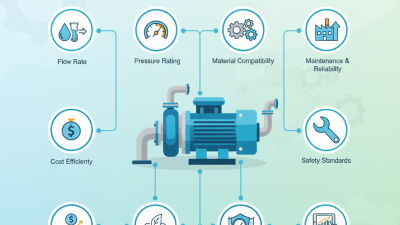
Selecting among the top 10 types of hydraulic oil pumps starts with four fundamentals: displacement, pressure, flow, and fluid compatibility. Displacement is the oil volume moved per shaft revolution, usually measured in cm³/rev. Flow depends on displacement, speed, and volumetric efficiency. A practical estimate is Q = displacement × rpm × efficiency. Pressure creates actuator force, while torque loads the pump shaft.
Use this relationship during sizing: hydraulic power in kilowatts is approximately pressure in bar × flow in litres per minute ÷ 600. For example, 210 bar and 80 L/min require about 28 kW before mechanical losses.
Field inspections often reveal an uncomfortable gap between calculated and actual performance. Worn clearances, cold oil, and restricted suction lines can reduce output noticeably. A perfect spreadsheet cannot repair poor installation.
Oil selection also matters. ISO 11158 classifies mineral hydraulic oils into HH, HL, HM, and HV categories, with different oxidation, rust, wear, and viscosity expectations. Always match the pump maker’s stated viscosity range and the machine’s temperature profile. The U.S. Department of Energy reports that suitable variable-speed pumping applications can reduce energy use by up to 50%, although results depend heavily on controls and operating hours. ISO 11158 compliance alone does not guarantee efficiency. Oil cleanliness, filtration, aeration control, and realistic duty cycles still decide service life. Small details matter.
Choosing a hydraulic oil pump starts with pressure, flow, viscosity, and contamination control. The ten main options include external-gear, internal-gear, gerotor, screw, vane, axial-piston, radial-piston, bent-axis piston, lobe, and hand-operated piston pumps. External-gear pumps are simple and economical for mobile equipment. Internal-gear and gerotor designs usually run quietly at moderate pressures. Screw pumps deliver smooth flow, making them useful for lubrication and transfer duties. Vane pumps offer low noise and clean operation, but dirty oil can damage their sliding components. Axial-piston and bent-axis pumps support high pressure and variable displacement. Radial-piston pumps suit demanding pressure cycles. Lobe and hand pumps serve more specialized, lower-flow needs.
In equipment inspections, I check the pump beside the reservoir, filters, hoses, and relief valve. A powerful pump cannot compensate for undersized piping or aerated oil. Oil temperature matters too; thin, overheated fluid can increase leakage and reduce volumetric efficiency.
Buyers should compare rated pressure with continuous working pressure, not only the peak figure. They should also confirm shaft loading, mounting dimensions, seal compatibility, and service access. A pump may look correct on paper yet perform poorly in cold climates or dusty factories. That risk is easy to underestimate. I would also question unusually high efficiency claims without test conditions, oil viscosity, and speed data. Supplier documentation should identify flow tolerance, noise level, filtration requirements, and recommended maintenance intervals. Availability of replacement parts can matter as much as the initial purchase price.
For global buyers, hydraulic pump ratings should be read as working benchmarks, not promises. A practical range spans 20–700 bar and 5–1,000 L/min. External gear, internal gear, gerotor, vane, radial-piston, swashplate axial-piston, bent-axis piston, screw, lobe, and diaphragm designs cover different duties. Gear and lobe pumps commonly serve 20–250 bar applications. Vane pumps often sit near 70–210 bar. Axial and radial piston pumps can reach 250–700 bar, depending on displacement and duty cycle. Screw pumps may deliver 200–1,000 L/min, but usually at lower pressures.
These benchmarks align with test principles in ISO 4409:2019 and pressure-pulsation guidance in ISO 10767-1:2015. The U.S. Department of Energy’s pumping-system guidance also stresses matching flow, pressure, speed, and system demand. That sounds obvious. It is often missed.
A 500 bar rating does not mean continuous operation at 500 bar. Temperature, oil viscosity, contamination, and inlet conditions can reduce service life sharply. Buyers should compare rated flow with flow at operating speed, not only catalogue maximums. For example, a 100 L/min pump may deliver less at low speed or high temperature. Noise and pulsation deserve measurement, too. The ranges are useful, but not sacred. Real installations remain messier than specification sheets.
Choosing among the top ten hydraulic oil pump types requires more than comparing flow and pressure. Global buyers should verify ISO 4406 cleanliness targets before approving a pump. A code such as 16/14/11 limits particles above three measured sizes. It directly affects valve life, servo response, and pump wear. Clean oil is not enough. Sampling points, filter placement, and laboratory methods also matter.
SAE J744 mounting standards simplify international replacement work. Check flange dimensions, shaft geometry, pilot diameter, rotation, and port orientation. A pump can meet the pressure rating yet fail during installation. I have seen this mistake delay commissioning because the shaft matched, but the mounting pilot did not. Always request the complete interface drawing. Small details matter.
Fluid selection changes the decision. Mineral hydraulic oil, biodegradable fluid, and fire-resistant fluid may require different seals, clearances, and temperature limits. Axial piston pumps often suit high-pressure duty, while gear and vane pumps can support simpler circuits. Screw pumps may handle steady flow with low pulsation. Viscosity must remain within the pump maker’s permitted range during cold starts and peak heat. A fluid that looks compatible may still attack elastomers. Recheck the data.
| Rank | Pump Type | Displacement / Pressure Profile | Typical Efficiency and Control | Common SAE J744 Mounting Interfaces | Typical ISO 4406 Cleanliness Target | Compatible Hydraulic Fluids | Typical Global Applications | Buyer Considerations |
|---|---|---|---|---|---|---|---|---|
| 1 | External Gear Pump | Fixed displacement; commonly used from low to medium-high pressure, approximately 100–250 bar depending on design. | Moderate volumetric efficiency; simple fixed-flow operation. Speed control or a proportional valve is normally used for flow adjustment. | SAE J744 2-bolt or 4-bolt flange patterns; SAE A, B, or C configurations are common in relevant size ranges. | ISO 4406 20/18/15 to 19/17/14 | Mineral oils such as ISO VG 32, 46, and 68; selected HLP/HM or HV fluids; some biodegradable fluids subject to seal approval. | Mobile machinery, agricultural equipment, power units, material handling, and lubrication systems. | Cost-effective and contamination-tolerant, but usually noisier and less efficient than piston pumps. |
| 2 | Internal Gear Pump | Fixed displacement; generally low to medium pressure with smooth delivery and good suction capability. | Good volumetric efficiency and lower pulsation than many external gear pumps; normally fixed flow. | SAE J744 2-bolt or 4-bolt flange interfaces, depending on frame size and installation arrangement. | ISO 4406 19/17/14 to 18/16/13 | Mineral hydraulic oils, HLP/HM and HV fluids; compatibility with fire-resistant or biodegradable fluids must be confirmed. | Industrial power units, presses, machine tools, plastics equipment, and low-noise hydraulic circuits. | Quiet operation and good suction performance; verify allowable viscosity and maximum pressure at operating temperature. |
| 3 | Gerotor Pump | Fixed displacement; typically low-pressure to moderate-pressure service with compact packaging. | Moderate efficiency; simple fixed-flow design with low pulsation at suitable operating speeds. | Application-specific SAE J744 flange or cartridge arrangements; mounting details must be checked against the pump envelope drawing. | ISO 4406 20/18/15 to 19/17/14 | Clean mineral hydraulic oils, engine-oil-type lubrication fluids in approved systems, and selected biodegradable fluids. | Compact lubrication units, small mobile equipment, auxiliary circuits, and low-flow power packs. | Compact and economical; not normally selected for high-pressure continuous-duty hydraulic circuits. |
| 4 | Fixed-Displacement Vane Pump | Fixed displacement; commonly used in low to medium-high pressure applications, often up to approximately 150–210 bar. | Good flow smoothness and relatively low noise; flow is fixed unless controlled externally. | SAE J744 2-bolt or 4-bolt flange patterns are common; shaft and pilot dimensions must match the drive arrangement. | ISO 4406 19/17/14 to 18/16/13 | Mineral oils, HLP/HM fluids, and some low-viscosity fire-resistant fluids when specifically approved. | Industrial machinery, injection-molding equipment, machine tools, and standard hydraulic power units. | Quiet and efficient at clean operating conditions; vane wear can increase rapidly with abrasive contamination. |
| 5 | Variable-Displacement Vane Pump | Variable displacement; typically low to medium pressure, with pressure-compensated or load-sensing control options. | Good energy efficiency for variable-demand circuits; displacement can be adjusted automatically or manually. | Commonly supplied with SAE J744 flange and shaft arrangements appropriate to the frame size; exact pilot and bolt pattern vary. | ISO 4406 18/16/13 to 17/15/12 | Mineral hydraulic oils, HLP/HM and HV fluids; fluid approval is required for fire-resistant and biodegradable alternatives. | Industrial automation, presses, mobile hydraulics, and systems requiring lower unloaded power consumption. | Improves energy use compared with fixed pumps, but requires cleaner fluid and more careful control-system commissioning. |
| 6 | Fixed-Displacement Axial Piston Pump | Fixed displacement; medium to high pressure, commonly around 250–350 bar continuous depending on design. | High power density and good efficiency; fixed flow is normally controlled through engine or motor speed. | SAE J744 SAE B, SAE C, or SAE D flange and shaft options are common in suitable frame sizes. | ISO 4406 18/16/13 to 17/15/12 | Mineral oils including HLP/HM and HV; selected phosphate-ester or biodegradable fluids only with compatible seals and materials. | Construction equipment, agricultural machinery, winches, industrial power units, and high-pressure auxiliary circuits. | High power density, but more sensitive to poor inlet conditions, air entrainment, and particulate contamination. |
| 7 | Variable-Displacement Axial Piston Pump | Variable displacement; widely used for high-pressure systems, often approximately 250–450 bar depending on continuous and peak ratings. | High efficiency and power density; available with pressure-compensated, load-sensing, electronic, or proportional controls. | SAE J744 SAE B, SAE C, SAE D, and larger flange/shaft combinations are commonly used according to frame size. | ISO 4406 17/15/12 to 16/14/11 | Mineral HLP/HM and HV fluids; fire-resistant or biodegradable fluids require documented material compatibility and derating review. | Excavators, cranes, injection-molding machines, presses, test equipment, and closed-loop or open-loop high-pressure systems. | Best suited to demanding variable-flow applications; filtration, commissioning, and control compatibility are critical. |
| 8 | Bent-Axis Axial Piston Pump | Fixed or variable displacement; high-pressure operation with strong efficiency at medium and high speeds. | Very high power density and good mechanical efficiency; variable versions support pressure and flow control. | SAE J744 SAE B, SAE C, SAE D, and larger mounting interfaces may be available; housing orientation is installation-specific. | ISO 4406 17/15/12 to 16/14/11 | Mineral HLP/HM and HV fluids; alternative fluids require seal, lubrication, and pressure-rating verification. | Mobile drives, hydrostatic transmissions, winches, marine equipment, and high-pressure industrial machinery. | Efficient for high-power transmission, but alignment, shaft loading, case-drain routing, and cleanliness require close control. |
| 9 | Radial Piston Pump | Fixed or variable displacement; designed for very high pressure, often above 400 bar in specialized applications. | High pressure capability and good volumetric efficiency; flow pulsation and operating speed depend on piston count and design. | SAE J744 flange and shaft options may be used, but many radial-piston layouts use application-specific mounting plates or manifolds. | ISO 4406 16/14/11 to 15/13/10 | Clean mineral hydraulic oils; selected water-glycol, phosphate-ester, or biodegradable fluids only when explicitly approved. | Hydraulic presses, clamping systems, steel equipment, test rigs, and high-pressure industrial circuits. | Excellent for extreme pressure and low-flow duties; generally larger, heavier, and more expensive than gear pumps. |
| 10 | Screw Pump | Fixed displacement; low to medium pressure, with high flow capacity and very low pressure pulsation. | Quiet operation and smooth delivery; commonly used as a constant-flow pump rather than a rapidly varying control pump. | SAE J744 flange mounting may be available on hydraulic versions; many installations use metric or application-specific flange arrangements. | ISO 4406 19/17/14 to 18/16/13 | Mineral hydraulic oils, low-viscosity lubrication oils, and approved biodegradable fluids within the specified viscosity range. | Hydrostatic lubrication, marine hydraulics, machine tools, cooling circuits, and low-noise industrial systems. | Excellent for smooth, quiet flow; confirm minimum viscosity, inlet pressure, and gas-release requirements before selection. |
ISO 4406 values are typical cleanliness targets rather than universal limits. The required code should be confirmed from the pump manufacturer’s technical documentation, system pressure, component sensitivity, filtration strategy, and fluid type. SAE J744 mounting references identify common interface families; exact flange, pilot, shaft, and bolt dimensions must be verified for the selected frame size.
An application and TCO matrix should compare duty, region, and lifetime cost. The ten main choices include external gear, internal gear, gerotor, balanced vane, unbalanced vane, axial piston, bent-axis piston, radial piston, screw, and hand-operated piston pumps.
External gear pumps suit mobile equipment and dusty sites because they tolerate contamination well. Axial piston pumps fit high-pressure machinery, but their filtration demands are stricter. Screw pumps provide quiet, steady flow in marine and industrial systems. Hand pumps remain practical for emergency operation and low-cycle equipment.
TCO means more than purchase price. Add energy use, oil replacement, filtration, seal service, installation, and downtime.
The U.S. Department of Energy reports that pumping systems can represent a significant share of industrial electricity use, making efficiency a major operating-cost factor.
ISO 4406 cleanliness codes also show why poor filtration can shorten component life. In hot regions, select seals and coolers for high ambient temperatures. In cold regions, verify oil viscosity during startup.
European installations may value low noise, while high-throughput Asian factories may prioritize service access and spare-parts availability. The matrix is useful, but not perfect. Field data can challenge the first selection.
Tips:
Record pressure, flow, duty cycle, oil temperature, and contamination before choosing. Compare five-year and ten-year TCO scenarios. Test actual startup behavior. A cheaper pump can become expensive after one avoidable failure. Industry guidance from ISO 4413 and published energy-efficiency studies should support the final decision, not replace hands-on commissioning experience.