Selecting the right oilfield jet pump manufacturer requires more than comparing brochures or production capacity. Field performance depends on fluid viscosity, gas interference, sand production, well depth, and available hydraulic power. These factors can change quickly between mature onshore wells and demanding offshore assets.
This introduction presents ten leading oilfield jet pump manufacturers worldwide. The comparison considers engineering experience, pump efficiency, material quality, customization, field support, and documented industry presence. It also examines how manufacturers respond to practical problems, including unstable injection pressure, nozzle wear, and inconsistent well deliverability. Small design details matter. A nozzle measured in millimeters can influence an entire production system.
Artificial-lift authority Dr. James P. Brill emphasized, “Artificial lift should be designed as part of the complete production system.” That principle remains useful when evaluating jet pump suppliers. A strong manufacturer should understand the reservoir, completion, surface equipment, and operating costs together. Not just the pump.
The ranking is not absolute. Public technical data can be incomplete, and regional service quality may differ. That limitation deserves attention. A company with excellent laboratory results may still provide weak field support in a remote basin. Conversely, a smaller supplier may offer better customization and faster troubleshooting. This guide therefore focuses on practical value, technical credibility, and long-term reliability rather than brand visibility alone. Readers should verify current certifications, references, test results, and local support before making a purchasing decision.
Top 10 Oilfield Jet Pump Manufacturers Worldwide?
Jet Pump Technology: Hydraulic Lift at 1,000–10,000 psi and 100–10,000 BPD
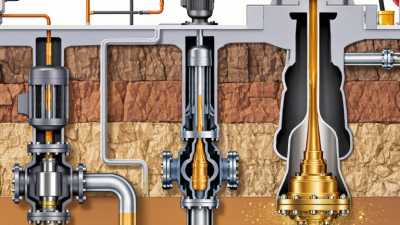
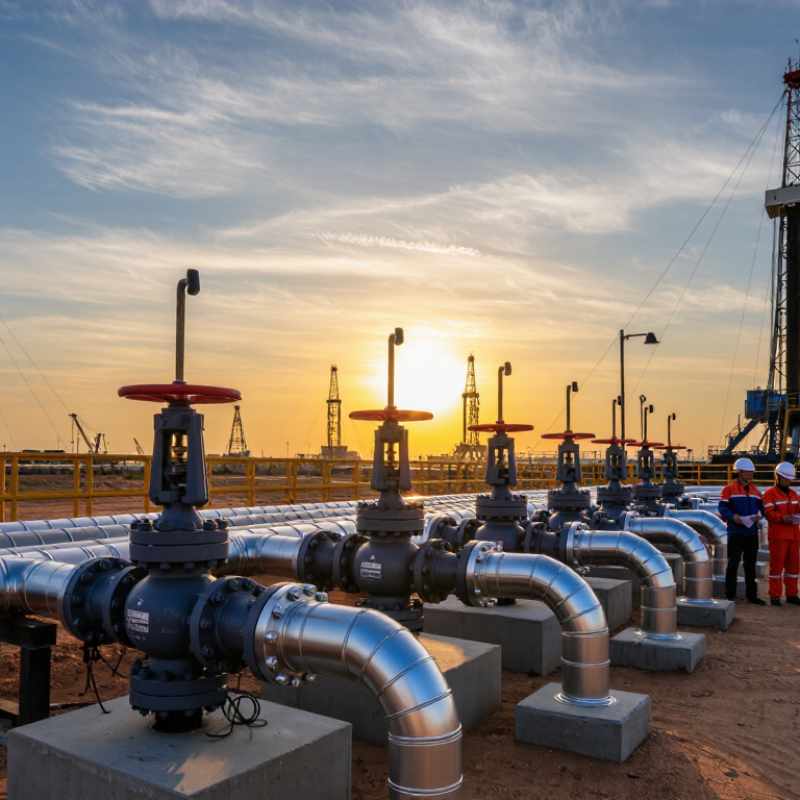
Oilfield jet pumps use high-pressure power fluid to lift produced fluids without downhole moving parts. Their operating range commonly spans 1,000 to 10,000 psi. Production capacity may extend from 100 to 10,000 barrels per day, depending on well conditions and pump geometry. A surface unit drives the power fluid through a nozzle. The resulting velocity creates pressure reduction inside the mixing chamber. Formation fluid then enters the flow stream and travels toward the surface.
When comparing the top ten manufacturers, buyers should examine nozzle design, throat tolerances, material selection, and field support. A reliable supplier should provide performance curves, injection-rate guidance, and documented testing procedures. It should also explain expected efficiency under changing water cut, gas interference, and sand production. Strong engineering support matters more than a broad catalog.
The numbers can mislead.
A 10,000 psi rating does not guarantee stable production at every depth. Actual results depend on intake pressure, fluid viscosity, gas volume, and power-fluid quality. I have seen operating plans fail when engineers treated laboratory efficiency as field performance. Careful surveillance is essential. Operators should track pressure, flow rate, temperature, vibration, and produced-fluid changes. Jet pumps are tolerant and adaptable, but they still need correct sizing, clean power fluid, and periodic review. A slightly conservative design may outperform an aggressive specification.
A credible ranking should begin with measurable operating data, not advertising claims. SPE field studies commonly report jet-pump production rates from about 1,000 to 10,000 barrels per day, depending on fluid properties and power-fluid pressure. Setting depth also matters. Published hydraulic-lift case studies describe installations beyond 10,000 feet, but deeper placement can increase friction losses and maintenance difficulty. A higher rate is not automatically better.
Efficiency deserves careful comparison. Technical reviews in SPE Production & Operations often place hydraulic jet-pump efficiency near 20–30% under practical field conditions. Laboratory figures may look higher. Field performance is usually less tidy. Buyers should request power-fluid rate, injection pressure, produced-fluid rate, water cut, and gas fraction from comparable wells. Those details reveal whether a manufacturer’s data reflects a real operating envelope.
API compliance should be documented, not assumed. API RP 11V5 provides guidance for hydraulic pumping system design, while API Spec Q1 addresses quality-management requirements for oilfield equipment manufacturers. A serious supplier should provide material traceability, pressure-test records, dimensional controls, and nonconformance procedures. I would also examine failure frequency, spare-part lead time, and service records over several years. The best selection may not have the highest catalog rate. It may deliver stable output at the intended depth, with verified efficiency and complete technical evidence.
The worldwide top ten oilfield jet pump manufacturers are best compared by design depth, field reach, and service capacity. Strong manufacturers offer hydraulic jet pumps for slim wells, high-temperature reservoirs, and unstable production conditions. Their designs should handle changing nozzle sizes, abrasive fluids, and limited downhole space. Practical field experience matters here. Laboratory efficiency alone does not guarantee reliable production.
The highest-ranked manufacturers usually support projects across several continents and maintain regional engineering teams. Their service capacity includes pump sizing, installation guidance, pressure testing, and rapid spare-part delivery. Some provide digital monitoring, while others rely on experienced field technicians. Both approaches can work. However, response time often matters more than impressive software. A supplier with nearby technical support may outperform a larger global operation. Rankings can also shift when after-sales coverage changes.
Tips: Check nozzle compatibility, operating pressure, expected fluid properties, and local service availability. Ask for field references from similar wells. Review maintenance intervals carefully. A low purchase price may hide expensive retrieval work. Also, request clear performance data under realistic conditions, not only ideal laboratory results. Buyers should leave room for uncertainty, because reservoir behavior can change faster than forecast models.
When comparing the top ten oilfield jet pump manufacturers worldwide, nozzle geometry deserves careful attention. A 2.5 mm nozzle can support controlled power-fluid entry in a lower-rate well. Larger 4 to 6 mm nozzles may deliver more lift, but they also demand higher surface pressure. The best size depends on fluid viscosity, casing limits, and expected drawdown. Tiny changes matter. Published flow curves are useful, yet real wells rarely match laboratory water conditions.
Power-fluid ratio shows how much injected fluid is required to produce each barrel of reservoir fluid. Ratios near 1:1 may suit efficient completions, while mature wells can require 2:1 or higher. That extra fluid increases pump load, separation duty, and operating cost. Engineers should compare ratios at identical intake pressures, fluid densities, and water cuts. Otherwise, the comparison is misleading. Depth ratings need equal scrutiny. A listed 10,000-foot rating may assume specific tubing grades, temperature limits, and installation conditions.
Reliable manufacturers disclose test methods, nozzle materials, pressure limits, and recommended operating envelopes. Independent field records add credibility, especially when they show run life and intervention frequency. Ask for measured performance, not only catalog promises. I would also challenge perfect charts. Sand, gas interference, scale, and imperfect alignment can reduce actual output. A practical ranking should reward transparent data and repeatable performance, not impressive depth figures alone.
Comparative engineering profiles for commonly available oilfield hydraulic jet-pump configurations. Manufacturer names and brand-specific data are intentionally omitted.
| Rank | Anonymous Manufacturer Profile | Typical Jet-Pump Configuration | Common Nozzle Sizes | Power-Fluid Ratio (Injected : Produced) |
Typical Depth Rating | Recommended Power-Fluid Pressure | Typical Liquid-Rate Range | Best-Fit Application |
|---|---|---|---|---|---|---|---|---|
| 1 | Profile A | Fixed-cavity hydraulic jet pump | 0.125–0.250 in (3.2–6.4 mm) |
1.5:1–2.5:1 | Up to 12,000 ft (3,658 m) |
2,000–4,000 psi (13.8–27.6 MPa) |
200–2,000 bbl/d (32–318 m³/d) |
Moderate-rate oil wells with limited tubing space |
| 2 | Profile B | Retrievable insert jet pump | 0.156–0.375 in (4.0–9.5 mm) |
2.0:1–3.0:1 | Up to 15,000 ft (4,572 m) |
2,500–5,000 psi (17.2–34.5 MPa) |
300–3,500 bbl/d (48–557 m³/d) |
Deep wells requiring wireline or slickline retrieval |
| 3 | Profile C | High-volume production jet pump | 0.250–0.500 in (6.4–12.7 mm) |
2.5:1–4.0:1 | Up to 10,000 ft (3,048 m) |
1,800–3,500 psi (12.4–24.1 MPa) |
800–5,000 bbl/d (127–795 m³/d) |
High-water-cut wells and high liquid volumes |
| 4 | Profile D | Slimhole concentric jet pump | 0.125–0.281 in (3.2–7.1 mm) |
1.5:1–3.0:1 | Up to 14,000 ft (4,267 m) |
2,000–4,500 psi (13.8–31.0 MPa) |
100–1,500 bbl/d (16–238 m³/d) |
Small-casing, slimhole, and mature-field wells |
| 5 | Profile E | Heavy-oil jet-lift assembly | 0.250–0.438 in (6.4–11.1 mm) |
2.5:1–4.0:1 | Up to 8,000 ft (2,438 m) |
1,500–3,000 psi (10.3–20.7 MPa) |
300–2,500 bbl/d (48–397 m³/d) |
Viscous crude, sand-prone, and high-solids production |
| 6 | Profile F | High-temperature retrievable jet pump | 0.156–0.375 in (4.0–9.5 mm) |
1.5:1–3.0:1 | Up to 13,000 ft (3,962 m) |
2,500–4,500 psi (17.2–31.0 MPa) |
250–2,500 bbl/d (40–397 m³/d) |
Thermal, high-temperature, and corrosive service |
| 7 | Profile G | Gas-tolerant hydraulic jet pump | 0.125–0.313 in (3.2–7.9 mm) |
1.5:1–2.5:1 | Up to 11,000 ft (3,353 m) |
1,800–3,800 psi (12.4–26.2 MPa) |
150–2,000 bbl/d (24–318 m³/d) |
Gassy wells and variable gas-liquid-ratio production |
| 8 | Profile H | Multistage jet-pump system | 0.187–0.375 in (4.8–9.5 mm) |
2.0:1–3.5:1 | Up to 15,000 ft (4,572 m) |
2,500–5,000 psi (17.2–34.5 MPa) |
200–3,000 bbl/d (32–477 m³/d) |
Deep, high-lift wells with changing reservoir conditions |
| 9 | Profile I | Compact workover jet pump | 0.125–0.250 in (3.2–6.4 mm) |
1.5:1–2.5:1 | Up to 9,000 ft (2,743 m) |
1,500–3,000 psi (10.3–20.7 MPa) |
100–1,200 bbl/d (16–191 m³/d) |
Temporary production, testing, and workover operations |
| 10 | Profile J | Corrosion-resistant alloy jet pump | 0.156–0.313 in (4.0–7.9 mm) |
1.5:1–3.0:1 | Up to 12,000 ft (3,658 m) |
2,000–4,000 psi (13.8–27.6 MPa) |
150–2,000 bbl/d (24–318 m³/d) |
CO₂-rich, sour, or chloride-bearing produced fluids |
Top 10 Oilfield Jet Pump Manufacturers Worldwide?
A credible top-ten comparison should examine field performance, not only sales claims. Jet pumps are valuable in heavy-oil wells because they tolerate high fluid viscosity and downhole heat. They also suit deviated wells, where rod-based systems may face friction and wear. SPE technical papers report strong sand-handling potential, but efficiency can decline when solids concentration rises. Real wells are less tidy than spreadsheets.
Offshore fields add different pressure. Compact surface equipment, remote monitoring, and reliable hydraulic power become essential. The IEA’s Oil 2024 report expects global oil demand to remain near current levels through 2030, while offshore production still supplies roughly one-quarter of worldwide crude output. The U.S. Energy Information Administration also identifies heavy oil and mature fields as important future production sources. These trends support continued demand for specialized jet-pump engineering. However, “best manufacturer” rankings remain imperfect. Reservoir pressure, fluid composition, and service quality can change the result.
Tips: Compare nozzle efficiency, sand tolerance, pump-rate flexibility, and offshore certification. Ask for field data from wells with similar viscosity and deviation. Check maintenance response times, not just equipment specifications. In practice, a slightly less efficient pump may deliver better uptime. That trade-off is often overlooked. A careful buyer should also review produced-water handling and erosion records before approving a final design.
This chart presents a technical application-suitability index from 1 to 5 for oilfield jet pump systems. Jet pumps are widely associated with heavy-oil lifting, deviated wells, sand-producing wells, and offshore applications because they have no downhole moving parts and can tolerate challenging well conditions. The index represents engineering relevance, not company market share or sales volume.