How to Choose the Best Flow Pump in China?

Choosing the best flow pump in China starts with the job it must perform, not the largest number on a product page. A pump’s duty point combines required flow and total head. Get either figure wrong, and a system may run loudly, waste energy, or fail to deliver enough water. Small details matter. Pipe length, bends, fluid temperature, and solids can all change the selection.

For this guide, fictional pump-selection engineer Lin Wei offers a practical principle: “Choose for the real duty point, not the brochure headline.” The quotation is illustrative, not a statement from a verified industry professional. Use the principle when comparing centrifugal, self-priming, or other flow pump designs. Check wetted materials against the liquid, and ask suppliers for performance curves, motor data, and clear test records. In China, also consider local service coverage, spare-part access, lead times, and whether the manufacturer can explain its test conditions. A low purchase price can look appealing. It may not remain low after installation and maintenance.

A careful comparison includes operating cost and the conditions around the pump. Ask how performance changes near the expected flow range. Confirm the connection size, installation space, and control method before ordering. Do not assume every listed specification has been measured under identical conditions. That assumption is easy to make. It deserves a second look. The sections ahead explain how to define requirements, compare suppliers, assess efficiency, and avoid common selection errors. The aim is a dependable choice, not a perfect one; real systems often reveal details that a specification sheet cannot.
How to Choose the Best Flow Pump in China?

Understanding Flow Pumps and Their Main Types

Flow pumps move liquid through a system, but the term covers several designs. Choosing one starts with the liquid, required flow rate, and discharge pressure. Check temperature, viscosity, solids, and whether the flow needs to stay steady. Small details matter. A pump built for clean water may perform poorly when grit or thick fluid enters the line.

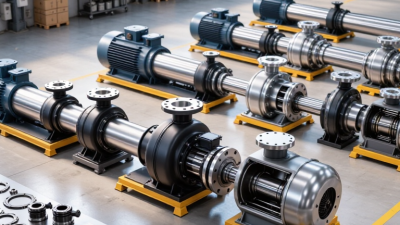
Centrifugal pumps use a spinning impeller to move liquid. They suit many clean-water tasks and can deliver high flow, though output changes with system resistance. Positive-displacement pumps, including gear and diaphragm designs, move a set volume per cycle. They can handle viscous liquids or precise dosing, but need suitable pressure protection. Axial-flow and mixed-flow pumps are often used when large volumes must move against relatively low or moderate head, such as in drainage or irrigation. The categories are useful, not perfect; real performance depends on the installation. When comparing pump options in China, review the performance curve at your actual operating point, not just the advertised maximum flow. Confirm wetted materials and test conditions, too.

Defining Your Flow Rate, Pressure, and Fluid Requirements

Define the duty point before comparing flow pumps in China. Record the required flow in cubic metres per hour, then calculate total dynamic head, including elevation, pipe friction, fittings, and pressure needed at the outlet. A pump’s advertised maximum flow rarely matches its flow at working pressure. Small details matter. Measure at the operating temperature, not just in a cool workshop.

Describe the fluid precisely: density, viscosity, temperature range, solids, and chemical compatibility can change the pump choice. A thick liquid may need a different impeller or speed than clean water. Note start-up conditions and whether flow varies during the day.

The U.S. Department of Energy and Hydraulic Institute’s Improving Pumping System Performance sourcebook reports that pumping systems use nearly 20% of global electrical energy demand; in some industrial operations, they account for 25–50% of energy use. That makes oversizing costly.

Ask suppliers for a performance curve covering your actual fluid and duty point, plus efficiency and power data. Measure, don’t guess. I would still recheck assumptions after installation: real pipe losses often differ from the estimate.

Comparing Pump Materials, Designs, and Energy Efficiency

Choosing a flow pump in China starts with the fluid, not the catalogue. Cast iron suits many clean-water duties, while stainless steel can better resist corrosion; chloride levels, temperature, and abrasive particles still matter. A material that looks “premium” may be the wrong choice. Check the actual fluid chemistry and seal requirements before comparing prices.

Design should match the duty point. Centrifugal pumps commonly handle steady, high-volume transfer, while positive-displacement designs can suit viscous fluids or controlled dosing. Ask for the pump curve and compare its best-efficiency point with the system’s real flow and head. Oversizing often leads to throttling and wasted power. Small details matter.

Energy costs deserve equal attention. The U.S. Department of Energy’s Improving Pumping System Performance sourcebook estimates pumping systems use nearly 20% of global electricity demand, and 25–50% of energy in some industrial operations. It also notes that system optimization can often reduce pump energy use by 20–50%. Variable-speed control may help when demand changes, but it is not automatically efficient at every operating point. No chart captures every site; measure flow, pressure, and operating hours before making the final comparison.

How to Choose the Best Flow Pump in China?

Compare pump materials and designs against the fluid, operating conditions, and required flow and head. The chart shows calculated hydraulic power for water at a constant 20 m head.

How to read it: Hydraulic power is calculated using water density of 1,000 kg/m³ and gravity of 9.81 m/s². It is the useful power delivered to the fluid; electrical input will be higher because pumps and motors have losses. Choose wetted materials for the fluid’s chemistry, and select a pump design suited to the required flow, head, and viscosity.

Assessing Chinese Manufacturers, Certifications, and Quality Control

When choosing a flow pump in China, assess the manufacturer behind the product, not just its listed capacity. Ask whether the factory designs, assembles, and tests the pump itself. A site visit can reveal practical details: clean work areas, labeled parts, and organized inspection stations. Small clues matter. They are useful, but not proof of consistent quality.

Review certifications carefully. Check the issuing body, validity period, and whether the document covers the specific pump model and intended market. A certificate for one product should not be treated as evidence for every model. Request test reports, material specifications, and a clear explanation of how the manufacturer controls changes to components. Documents can look convincing. Verify them independently when possible.

Quality control should be visible in records, not only promised in a sales call. Ask for inspection procedures, calibration records, and test results tied to a sample or production batch. For a pump, confirm how flow, pressure, leakage, and operating noise are checked. Then compare a sample’s performance with your actual operating conditions. A sample is only a snapshot. Even careful checks can miss problems that appear after months of use, so clarify warranty terms, spare-part availability, and how complaints are investigated before placing an order.

Checking Pricing, Warranty, and After-Sales Support

When comparing flow pump quotations in China, check what the price includes: motor, seals, control cabinet, testing, packing, and delivery. A cheaper offer may exclude commissioning or spare parts. Ask for an itemized quotation and confirm the pump’s flow rate and head at your actual operating point. Small differences matter.

Warranty wording deserves close attention. Check its duration, start date, covered components, and exclusions for wear or incorrect installation. Ask who pays freight and labor if a unit fails. The U.S. Department of Energy’s Improving Pumping System Performance sourcebook reports that pumping systems use nearly 20% of the world’s electrical energy. That makes efficiency and repair support relevant to lifetime cost, not just purchase price. Still, a warranty alone proves little.

After-sales support should be specific. Request response-time targets, service locations, parts availability, and technical help in your preferred language. Ask how quickly common seals or bearings can ship, and whether remote troubleshooting is available. A supplier’s written answers are easier to compare than reassuring calls. I would also request a sample service report; it may reveal gaps in documentation. That step can feel fussy, but downtime is less forgiving.

How to Choose the Best Flow Pump in China? – Checking Pricing, Warranty, and After-Sales Support

Use this comparison for initial budgeting and supplier discussions. Price ranges are indicative estimates in CNY for common pump-and-standard-motor configurations; actual quotations depend on flow rate, head, materials, motor efficiency, quantity, taxes, and delivery terms.

Pump Type Typical Application Indicative Price Range (CNY) Warranty Checks After-Sales Support to Confirm Best-Fit Buying Consideration
Horizontal centrifugal pump Clean-water transfer, circulation, and general-purpose pumping. ¥300–¥2,500 Request the warranty period in writing, including its start date and coverage for the pump, motor, and parts. Ask about remote troubleshooting, replacement-part availability, and who pays shipping for warranty repairs. A practical option for straightforward duties when the required flow and head match the pump curve.
Inline centrifugal pump Building water circulation, HVAC systems, and pipeline boosting. ¥600–¥6,000 Confirm whether seals, bearings, and electrical components are covered and whether installation conditions affect coverage. Check whether technical assistance is available for commissioning, alignment, and variable-frequency drive compatibility. Consider it where an in-line installation can simplify piping and save floor space.
End-suction centrifugal pump Industrial water supply, irrigation, and larger circulation systems. ¥900–¥12,000 Ask for the written warranty terms for both the pump assembly and motor; exclusions may apply to wear or dry running. Confirm access to impellers, mechanical seals, bearings, and service instructions for the selected model. Compare the certified performance curve with the system duty point, not just the maximum flow rating.
Self-priming centrifugal pump Applications where the pump may need to lift water from a source below its installation level. ¥500–¥7,000 Clarify whether priming-related failures are covered and what operating conditions are required to preserve the warranty. Ask for guidance on priming, suction-pipe layout, and troubleshooting loss of prime. Check the permitted suction lift and priming time against the actual site layout.
Stainless-steel centrifugal pump Water transfer where corrosion resistance or cleaner wetted surfaces are required. ¥900–¥10,000 Verify the specified wetted-part material and whether the warranty covers corrosion under the intended fluid conditions. Confirm material documentation, spare-part lead times, and service support for seals and other wetted components. Match the stainless-steel grade and seal materials to the fluid; “stainless steel” alone does not define chemical compatibility.