Top Hydraulic Oil Pump Manufacturers for Global Buyers
Choosing a reliable hydraulic oil pump manufacturer affects machine uptime, energy use, maintenance costs, and operator confidence. Global buyers need more than attractive catalog images. They need verified performance, stable production, responsive support, and clear documentation.
Herbert E. Merritt, author of Hydraulic Control Systems, described hydraulic control as “a means of transmitting power and controlling motion.” That principle still matters. A pump must deliver steady flow under pressure, even when a construction loader works in dust or a factory press cycles thousands of times. Materials, sealing quality, noise levels, temperature tolerance, and efficiency deserve careful review.
Small details reveal manufacturing discipline.
Look for documented test procedures, traceable components, and realistic performance curves. Confirm whether the supplier supports ISO-based quality systems, technical drawings, spare parts, and regional service. Ask how the pump performs after extended operation, not only during a short demonstration. Field experience often exposes weaknesses that brochures hide.
This guide examines leading hydraulic oil pump manufacturers serving global buyers. It considers product range, engineering capability, customization, delivery reliability, warranty practices, and technical communication. It also recognizes an uncomfortable truth: no supplier is perfect for every application. A manufacturer with excellent heavy-duty pumps may offer limited support for compact mobile equipment. A low purchase price may create higher costs later.
Selection requires judgment.
Readers should compare verified evidence with their own pressure, flow, fluid, temperature, and duty-cycle requirements. The strongest choice is not always the largest brand. It is the manufacturer that consistently matches technical claims with dependable field performance.
What Defines a Reliable Hydraulic Oil Pump Manufacturer
Top Hydraulic Oil Pump Manufacturers for Global Buyers
What Defines a Reliable Hydraulic Oil Pump Manufacturer
A reliable hydraulic oil pump manufacturer proves performance before shipment. Grand View Research estimated the global hydraulic pumps market at about USD 10.34 billion in 2023, with continued growth through 2030. This expansion increases supplier choices, but not every factory offers equal engineering control.
Look for documented pressure, flow, efficiency, and endurance results. A serious manufacturer should provide test records for each production batch. Ask about materials, heat treatment, seal compatibility, and shaft alignment. Small defects often appear as noise, heat, or unstable actuator movement. They become expensive after installation.
Clean oil matters greatly. ISO 4406 cleanliness codes help buyers compare contamination levels objectively. Reliable producers define filtration requirements and inspect internal surfaces before assembly. They also maintain traceability for castings, seals, and replacement parts. That detail sounds ordinary. It is not.
Field experience still matters. A supplier should explain how its pumps perform in cold starts, dusty sites, and continuous-duty cycles. It should also publish realistic service intervals, not optimistic promises. The U.S. Department of Energy’s pump-system guidance links better system design with lower energy waste, although hydraulic applications require separate validation. Buyers should request independent test evidence where possible. Certificates alone can mislead. Even experienced engineers sometimes overlook installation conditions, which means manufacturer support after delivery remains a practical reliability test.
Key Product Types and Performance Features
Hydraulic oil pump manufacturers serve global buyers with several proven product types. Gear pumps offer simple construction, reliable operation, and competitive pricing. They suit lubrication systems, compact machinery, and moderate-pressure applications. Vane pumps run quietly and deliver smoother flow. They often fit industrial equipment requiring stable performance and lower vibration.
Piston pumps support higher pressures and demanding duty cycles. Fixed-displacement models provide predictable flow, while variable-displacement designs adjust output as load changes. This can reduce energy use and heat generation. Look for hardened components, accurate flow control, strong shaft seals, and contamination-resistant designs. Efficiency matters, but it should not hide service complexity. A highly efficient pump may still disappoint if replacement parts are difficult to obtain. I have seen specifications look impressive, yet field performance changed with fluid temperature and installation quality.
Tips: Match pressure, flow, speed, and oil viscosity before comparing suppliers. Check noise levels under working load, not only at idle. Ask for test data, material details, and maintenance guidance. Verify regional support and spare-part availability. Small details matter. Filter quality matters too. A clean hydraulic circuit protects every pump type and extends operating life. Claims should be reviewed against real machine conditions, because laboratory figures rarely tell the entire story.
Global Manufacturing Standards and Quality Control
Global buyers of hydraulic oil pumps need more than attractive specifications. They need evidence that manufacturing remains stable across batches. Reliable suppliers usually operate documented quality systems, often aligned with ISO 9001 principles. They control raw materials, machining accuracy, assembly torque, and pressure testing. Each pump should carry a traceable serial number, inspection record, and material certificate where applicable. These details make technical reviews faster and reduce uncertainty after shipment.
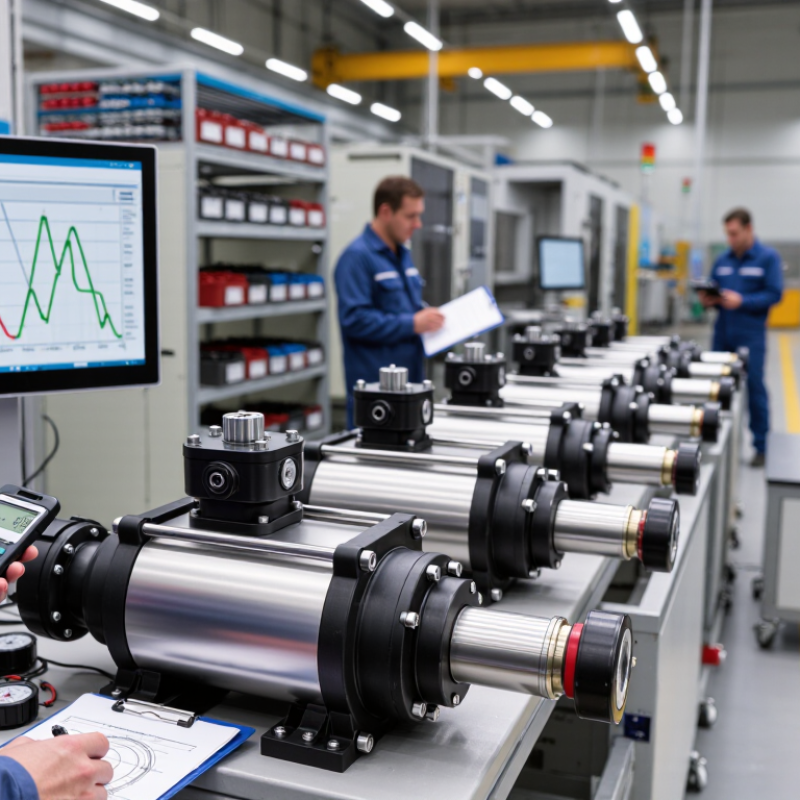
Quality control must also reflect real operating conditions. Inspectors may check surface finish, shaft runout, leakage, noise, and flow performance. Cleanliness is equally important, because small particles can damage valves and shorten service life. Many factories use contamination ratings, controlled assembly areas, and sealed packaging. However, standards alone do not guarantee good results. A factory may pass an audit while missing a recurring process weakness. Practical experience still matters.
Tips: Ask for recent test reports, calibration records, and sample inspection data. Confirm how nonconforming pumps are isolated and corrected. Request photos of pressure testing, labeling, and export packaging. Compare several production batches, not only one sample. A supplier that explains limitations honestly may be more dependable than one promising flawless performance. Independent inspections can also reveal issues hidden by polished documents.
How to Compare Suppliers for Industrial Applications
Top Hydraulic Oil Pump Manufacturers for Global Buyers
When comparing hydraulic oil pump suppliers, start with the application, not the catalog. Define required flow, working pressure, rotation speed, oil viscosity, and operating temperature. A pump rated for 250 bar may perform poorly if the system runs continuously near its limit. Ask for performance curves under conditions matching your equipment. Check volumetric efficiency, noise levels, shaft load limits, and filtration requirements. Small differences can affect energy use and service life.
Tips:
Request a complete datasheet, material list, test report, and warranty terms. Ask how each unit is tested before shipment. Review production capacity and spare parts availability. Factory audits or verified customer references can reveal details that brochures omit. Do not guess.
Reliable suppliers explain assumptions clearly. They should discuss seal materials, contamination risks, installation alignment, and oil compatibility. Confirm lead times in writing, including sample approval and export documentation. A capable technical team should answer specific questions without avoiding uncomfortable limitations. Pricing alone is weak evidence. The cheapest pump may require frequent replacement or costly redesign. The most expensive option may also include unnecessary features. Datasheets can hide important conditions, so compare identical duty points. No supplier is perfect. Even a promising factory may provide inconsistent batch records or delayed feedback. Leave room for inspection, pilot testing, and corrective action before placing a large order. Test the pump with your actual oil and filter arrangement whenever possible.
Purchasing Factors for International Buyers
Top Hydraulic Oil Pump Manufacturers for Global Buyers
Purchasing Factors for International Buyers
International buyers should compare hydraulic oil pump manufacturers beyond catalogue price. Market data supports the need for careful selection. MarketsandMarkets projects the hydraulic pumps market to grow from about USD 11.5 billion in 2023 to USD 15.5 billion by 2028, at a 6.1% CAGR. Growth does not remove procurement risk. It can increase it.
Start with operating conditions. Confirm displacement, rated pressure, speed range, oil viscosity, temperature, and duty cycle. A pump rated for 250 bar may fail early under continuous peak pressure. Ask for performance curves, noise data, material specifications, and test records. ISO 4409 provides useful guidance for hydraulic pump testing and performance verification. Request cleanliness evidence using ISO 4406 codes, especially for servo or precision equipment.
Total cost matters more than purchase price. The U.S. Department of Energy has reported that hydraulic systems may waste 20% to 30% of input energy through leakage, throttling, and poor maintenance. Efficiency deserves a line in the quotation. So does spare-parts availability. Check lead times, export packaging, warranty terms, technical support, and local service capability. Customs classification and Incoterms also affect the final landed cost.
A spreadsheet can still mislead. Some buyers compare only pressure and flow, then discover incompatible shafts or ports. That mistake is expensive. Ask manufacturers for a dimensional drawing and a complete application review before ordering. Independent inspection is useful, but not always sufficient. Field conditions remain less predictable than factory tests.
Top Hydraulic Oil Pump Manufacturers for Global Buyers
Purchasing Factors for International Buyers
This procurement benchmark ranks the main factors international buyers typically assess when sourcing hydraulic oil pumps. Technical performance, lifecycle cost, reliability, compliance, delivery capability, and after-sales support should be evaluated together rather than by purchase price alone.