
Who Are the Top Sucker Rod Pump Suppliers in China?
China’s sucker rod pump market serves oilfields with varied depths, fluid conditions, and operating demands. Suppliers may offer complete pumping systems, individual components, or customization for specific wells. For buyers, a polished product page is not enough. The details matter: material specifications, machining quality, seal design, and documented performance under field conditions.
This guide examines how to identify leading Chinese suppliers using practical, verifiable criteria. These include manufacturing experience, product range, quality-control procedures, technical support, export capability, and customer references. Buyers should also check whether a supplier can explain how its pump suits a well’s production rate, fluid properties, and maintenance needs. Ask for drawings, test records, and clear warranty terms. Small details can reveal a lot.
A supplier’s claims deserve careful review. “Top” can mean different things, and publicly available information may not tell the whole story. That judgment is not perfect. A large catalog, for example, does not prove consistent performance in the field. Where possible, compare specifications and request evidence that matches the intended application. A direct technical discussion can help uncover gaps before an order is placed.
The companies covered here are presented as candidates for evaluation, not as a universal ranking. Each operation has different priorities, and the best fit depends on the well, service conditions, and support required. A reliable choice starts with clear requirements and evidence—not assumptions.
What a Sucker Rod Pump Is and How It Works
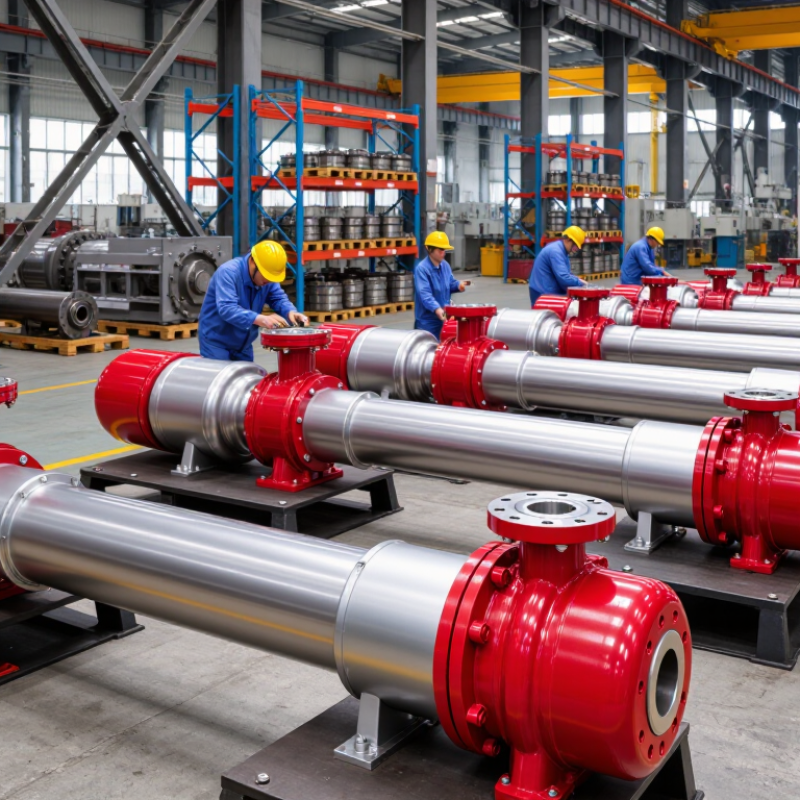
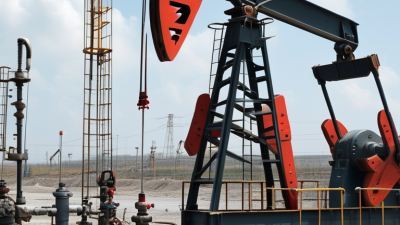
A sucker rod pump is a reciprocating positive-displacement pump installed downhole. At the surface, a motor turns a crank and walking beam, moving the polished rod and connected rod string up and down. The pump’s plunger contains a traveling valve; a standing valve sits below it. During the upstroke, the traveling valve closes and lifts fluid above the plunger, while the standing valve opens to admit more fluid. On the downstroke, the standing valve closes and the traveling valve opens, letting fluid pass through the plunger. The cycle repeats. That is the core cycle.
The U.S. Energy Information Administration’s February 2025 Short-Term Energy Outlook reported average U.S. crude oil production of about 13.2 million barrels per day in 2024. That broad production figure is not a measure of rod-pump use, but it signals the scale of oil-field operations where artificial lift supports production. In practice, rod pumps suit many low-to-moderate-rate wells, though gas interference, abrasive solids, and excessive pump speed can reduce performance. Operators monitor fluid levels, stroke rate, and polished-rod loads to spot problems. Small details matter. A pump can look simple on a diagram; downhole conditions are less tidy, and choosing the right setup often takes adjustment.
| Topic | Dimension | Description | What to Check When Evaluating a Supplier |
|---|---|---|---|
| Pump Basics | Purpose | A sucker rod pump is a reciprocating downhole pump used in artificial lift. It helps bring produced fluid from a well to the surface when reservoir pressure alone is insufficient. | Confirm that the proposed pump type and configuration are suitable for the well’s operating conditions. |
| Pump Basics | Main components | A typical rod pump includes a barrel, plunger, standing valve, and traveling valve. The pump is connected to a surface pumping unit by a string of sucker rods. | Review component materials, dimensions, connection details, and compatibility with the existing rod and tubing system. |
| Operating Cycle | Upstroke | As the plunger moves upward, the traveling valve generally closes under the fluid load above it. The standing valve opens as pressure in the pump barrel falls, allowing fluid to enter the barrel. | Ask for design information relevant to the expected fluid load and operating conditions. |
| Operating Cycle | Downstroke | As the plunger moves downward, the standing valve generally closes. The traveling valve opens when the pressure below the plunger exceeds the pressure above it, allowing fluid to pass through the plunger. | Check that the pump design is appropriate for the planned stroke, speed, and well conditions. |
| Selection | Well conditions | Important operating factors include well depth, production rate, fluid properties, temperature, pressure, gas, sand, and corrosive components. | Look for a supplier that requests well data before recommending a pump rather than relying on a one-size-fits-all specification. |
| Selection | Materials and wear | Material and surface choices depend on the service environment. Abrasive solids, corrosion, and elevated temperatures can affect component life and performance. | Request material specifications and evidence that the selected configuration matches the stated service conditions. |
| Supplier Review | Standards and quality control | API Specification 11AX covers subsurface sucker rod pumps and related equipment. Applicable requirements depend on the product and purchase specification. | Verify the relevant standard, inspection plan, traceability, and test documentation for the specific order. |
| Supplier Review | Manufacturing capability | Production capability can include machining, heat treatment, assembly, dimensional inspection, and functional testing. | Assess documented processes, inspection records, production capacity, and the supplier’s ability to meet the required tolerances. |
| Supplier Review | Customization and support | Some projects require nonstandard dimensions, material choices, connections, or operating guidance. | Confirm drawing approval, technical communication, spare-part availability, delivery terms, and after-sales support before ordering. |
Related Posts
-

Mastering Sucker Rod Pump Efficiency through Advanced Techniques and Industry Insights
-

10 Best Sucker Rod Pumps for Efficient Oil Extraction in 2023
-
What is an Ultra Jet Pump and How Does it Work?
-
2026 Best Downhole Jet Pump Types for Oil Wells?
-
How to Choose a Water Well Jet Pump in 2026?
-
Who Are the Top Gas Jet Pump Manufacturers in China?