What Is the Best Downhole Jet Pump in 2026?

What is the best downhole jet pump in 2026? The honest answer depends on the well, not the brochure. Pump selection turns on fluid rate, gas fraction, solids, available power-fluid pressure, and the cost of retrieval. A pump that performs well in a clean test loop may behave differently with abrasive sand and changing water cut. Small details matter.

The U.S. Energy Information Administration reported average U.S. crude oil production of 13.2 million barrels per day in 2024, a record, in its February 2025 Short-Term Energy Outlook. That figure describes the wider production landscape; it does not prove one lift method is best. SPE technical papers on hydraulic jet pumping offer useful field and engineering evidence, including discussion of nozzle-throat sizing, pressure losses, and solids handling. Still, results from one well should not be treated as a promise for another.

This guide compares leading pump designs and selection factors using measurable criteria: operating envelope, hydraulic efficiency, erosion resistance, service access, and total intervention cost. It also considers what manufacturers’ specifications leave out, such as fluid-property changes and surface-system limits. Look closely at the assumptions. “Best” may mean reliable production in a sandy well, or lower operating cost in a high-rate application. Those are not always the same choice. A careful comparison can narrow the options, but site-specific engineering remains essential.
What Is the Best Downhole Jet Pump in 2026?

What a Downhole Jet Pump Is and How It Works

What Is the Best Downhole Jet Pump in 2026?

What a Downhole Jet Pump Is and How It Works

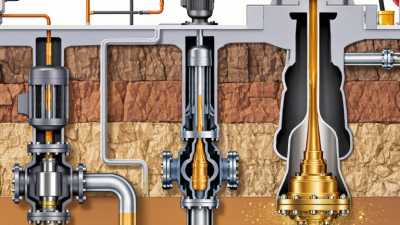
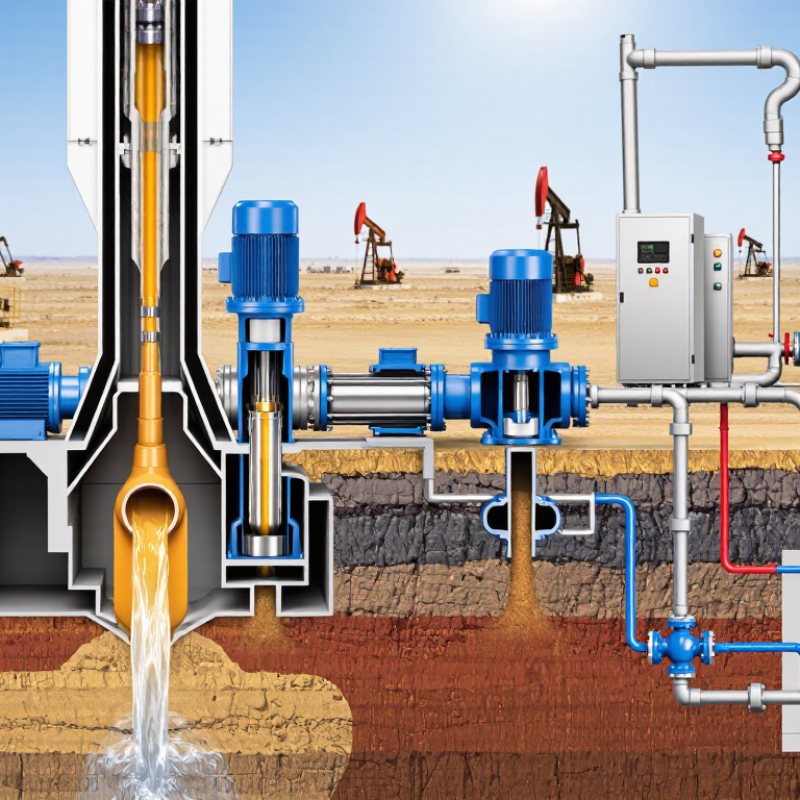
A downhole jet pump lifts well fluids without a moving downhole pump assembly. Surface equipment sends pressurized power fluid down the tubing. In the pump, a nozzle converts pressure into a fast jet. That jet draws in produced fluid through the intake and mixes with it in the throat. The mixture then passes through a diffuser, where some velocity becomes pressure, before returning to the surface through the annulus. Simple in principle. Sensitive in practice.

The U.S. Energy Information Administration reported that U.S. crude oil production averaged about 13.2 million barrels per day in 2024, in its January 2025 Short-Term Energy Outlook. That figure is not a jet-pump performance measure; it shows the scale of production systems where dependable artificial lift matters. For a specific well, engineers compare fluid rate, water cut, gas content, depth, and available power-fluid pressure. A jet pump can be retrieved by circulating fluid, which may reduce intervention work, but efficiency can fall when nozzle and throat sizing do not match changing well conditions. The “best” choice is therefore well-specific. Field measurements matter more than a tidy catalog rating.

Key Components and Operating Principles

A downhole jet pump has no moving parts underground. Its core assembly contains a nozzle, a mixing throat, and a diffuser. Pressurized power fluid travels down the tubing and accelerates through the nozzle. That fast stream lowers pressure, drawing produced fluid into the throat. The fluids mix, then pass through the diffuser, where some velocity becomes pressure. The combined flow returns to surface, often through the annulus. Small dimensions matter: nozzle and throat sizing affect both production rate and the pressure required at surface.

The Society of Petroleum Engineers’ Petroleum Engineering Handbook describes hydraulic jet-pump efficiencies commonly in the 20–30% range, depending on operating conditions. That is a useful design reference, not a promise for a particular well. A field assessment should check intake pressure, fluid viscosity, gas fraction, solids, and available power-fluid pressure. For example, abrasive sand can erode a nozzle, changing its effective diameter and shifting the pump’s operating point. A small throat. Engineers also need to consider where produced fluid returns and how that affects surface equipment. I would not choose a pump from efficiency figures alone; those figures can hide important well-specific trade-offs. Proper sizing depends on measured well data and a validated performance curve.

What Is the Best Downhole Jet Pump in 2026? - Key Components and Operating Principles
Component or design factor Purpose Operating principle Selection considerations
Downhole jet pump assembly Lifts produced fluids using pressurized power fluid supplied from the surface. Power fluid passes through a nozzle at high velocity. The resulting jet entrains production fluid, and the combined stream is directed toward the surface through the well’s return flow path. There is no reciprocating downhole rod or moving pump assembly. Suitability depends on well conditions, available surface pressure and power-fluid circulation arrangements.
Power-fluid nozzle Converts pressure energy in the power fluid into a high-velocity jet. As fluid accelerates through the nozzle orifice, its pressure falls and its velocity increases, creating the conditions needed to draw in produced fluid. Nozzle size affects the balance between power-fluid rate, pressure, and entrainment. It should be selected using the expected well inflow and system operating limits.
Mixing throat Provides the mixing section where power fluid and produced fluid combine. The high-speed power-fluid jet transfers momentum to the produced fluid as both streams pass through the throat. Throat dimensions influence mixing and the pump’s operating range. Matching the throat to the nozzle and well conditions is important for efficient operation.
Diffuser Helps recover pressure in the mixed-fluid stream. The diffuser gradually reduces flow velocity and converts part of the stream’s kinetic energy into pressure, allowing the mixture to move toward the surface. Diffuser performance depends on its geometry and the flow conditions. Inappropriate sizing can reduce pressure recovery and overall system performance.
Pump housing and seals Hold and align internal components and provide the necessary flow passages. The housing directs fluid through the nozzle, throat, and diffuser; seals help limit unwanted bypass between designated flow paths. Materials and sealing arrangements should suit the well’s temperature, pressure, produced-fluid chemistry, solids exposure, and completion design.
Power-fluid circuit Supplies the energy that drives the downhole pump. A surface pump pressurizes the power fluid and sends it down the well to the jet nozzle. The fluid may be produced fluid or a compatible treated fluid, depending on the installation. Check surface-pump capacity, fluid compatibility, filtration needs, available pressure, and the selected circulation configuration.
Return flow path and surface separation Routes the produced-fluid and power-fluid mixture to the surface for handling. After pressure recovery in the diffuser, the combined stream travels through the designated return path. Surface equipment separates or conditions fluids as required by the operating system. Confirm that tubing, annular, and surface flow paths are compatible with the selected completion and circulation arrangement; verify pressure ratings and fluid-handling capacity.
Operating conditions Determine whether the pump can deliver the required production rate reliably. Performance depends on the interaction of nozzle and throat geometry, power-fluid pressure and rate, well inflow, fluid properties, and required lifting pressure. Use well-specific production and pressure data. Consider gas, solids, viscosity, temperature, corrosion, and changing reservoir conditions when evaluating the operating envelope.
Best-fit choice in 2026 Identifies the most suitable design for a particular well rather than a universal “best” pump. A properly sized, retrievable jet-pump configuration can be a strong candidate where surface-powered artificial lift, downhole simplicity, and circulation-based servicing fit the well plan. Compare expected production, energy use, installation and retrieval method, fluid compatibility, surface facilities, and life-cycle cost against other lift methods using current well data.
Important qualification Prevents overgeneralizing performance claims. Jet pumps have no moving downhole parts, but the complete lift system still relies on surface equipment and correctly matched flow passages. Actual capacity, efficiency, and operating limits are design- and well-specific; confirm them with engineering calculations and the applicable equipment specifications.

Factors That Shape Downhole Jet Pump Performance

What Is the Best Downhole Jet Pump in 2026?
Factors That Shape Downhole Jet Pump Performance

There is no universal “best” jet pump. Performance depends on matching the nozzle and throat to the well’s inflow, fluid properties, and required lift. A nozzle that supplies strong mixing in one well may waste power fluid in another. Small details matter: a few extra barrels per day of injection can change the operating point and increase surface power demand.

Efficiency is a real constraint. The SPE Petroleum Engineering Handbook, 2nd edition (2007), describes typical hydraulic jet-pump efficiency as roughly 20–30%. That range is a useful design reference, not a field guarantee. Higher fluid viscosity, free gas, and pressure losses through tubing can all reduce useful lift. Solids can also erode nozzle surfaces, gradually shifting the pump away from its intended performance. Watch the trend.

In practice, compare power-fluid rate and pressure with produced-fluid rate, intake pressure, and water cut over time. A stable rate alone can hide rising energy use. I would also check the fluid sample and solids history before changing nozzle dimensions; operators sometimes tune the pump around incomplete data. That is worth questioning. A careful well test, with pressures measured at the pump and surface, is usually more informative than a catalog rating.

What Is the Best Downhole Jet Pump in 2026? Factors That Shape Performance

Effect of power-fluid pressure differential on ideal jet velocity

Higher pressure differential can produce higher jet velocity. Bars show ideal estimates calculated using Bernoulli’s equation for water at 1,000 kg/m³; actual downhole results are lower and depend on pump geometry, fluid viscosity, gas content, solids, and pressure losses. There is no single best operating point for every well.

Comparing Jet Pump Designs for Different Well Conditions

What Is the Best Downhole Jet Pump in 2026?

There is no single best downhole jet pump for every well. The right design depends on fluid properties, production goals, pressure limits, and how often equipment can be serviced. It depends.

In wells with sand or other solids, a simple flow path and replaceable nozzle and throat can make maintenance more manageable. Yet abrasive particles may still wear these parts and reduce efficiency.

Solids matter.

For deeper wells or high-pressure applications, engineers should check the available power-fluid pressure against the required lift. A design that performs well in a clean-fluid test may behave differently with gas, viscous oil, or fluctuating inflow.

Retrievable configurations can simplify inspection when intervention access is limited, while other arrangements may suit wells where retrieval is straightforward. The choice also affects installation and servicing time.

A clean design chart can make this decision look easier than it is. Compare expected operating range, fluid compatibility, erosion risk, and retrieval method using well-specific data. Ask for documented performance assumptions, not just a peak-efficiency figure.

Leave room for uncertainty: actual well conditions can change, and nozzle sizing may need adjustment after operating results are reviewed.

How to Choose the Best Downhole Jet Pump in 2026

What Is the Best Downhole Jet Pump in 2026?

How to Choose the Best Downhole Jet Pump in 2026

Choosing a downhole jet pump starts with the well, not a catalog rating. Record the target production rate, setting depth, flowing pressure, fluid temperature, gas fraction, and solids load. Then check whether surface equipment can supply the required injection pressure and handle returned fluids. The U.S. Energy Information Administration reported average U.S. crude-oil production of about 13.2 million barrels per day in 2024. That market figure does not identify a winning pump; it does underline why site-specific operating data matters. Every well is different.

Compare candidate designs using nozzle and throat options, expected drawdown, erosion risk, and retrieval method. A jet pump has no moving parts downhole, which can suit wells with sand or difficult access, but it still depends on suitable surface power and careful fluid management. Ask suppliers for calculations using your actual pressure and fluid inputs, then validate assumptions against recent well tests. Small errors matter. Check the full operating envelope, not just peak rate: a pump that performs well at one test point may struggle after water cut or gas production changes. Review maintenance records and include the cost of injection, separation, and workovers. Field data can be messy; note uncertainty rather than treating estimates as facts.